Blog
Inflation Is Down, So Why Do Nigerians Still Feel Poorer?
**Last updated: April 14, 2026**
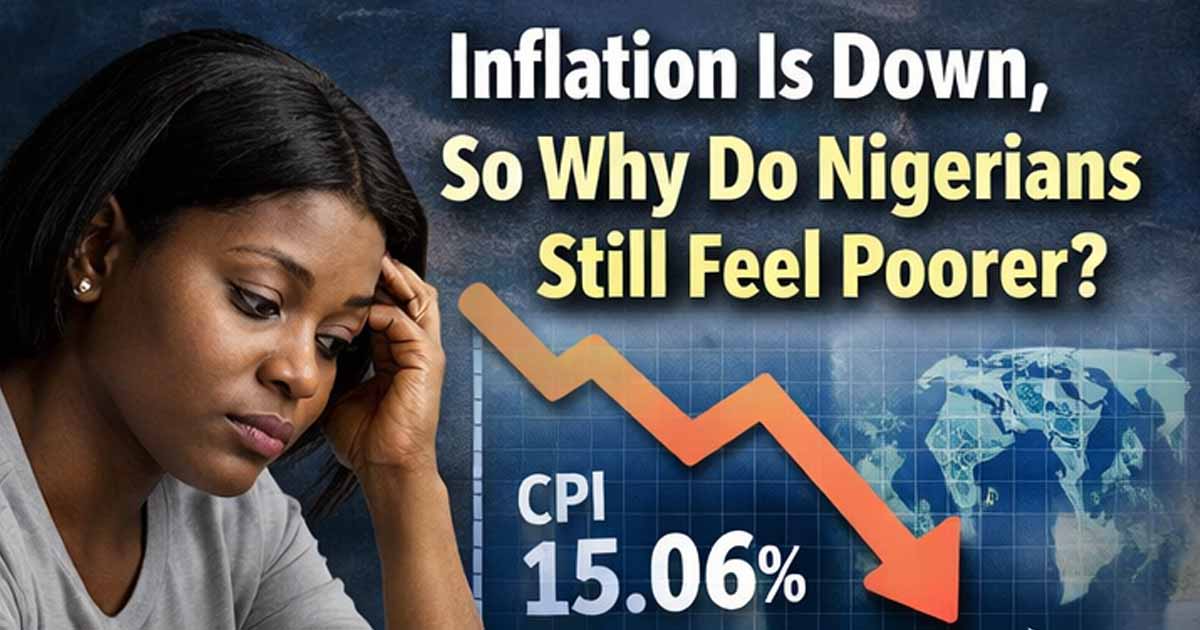
Because **lower inflation does not mean lower prices**. It usually means prices are still rising, just more slowly than before. So even though Nigeria’s headline inflation eased to **15.06% in February 2026**, many Nigerians still feel poorer because food, transport, power, rent, and daily living costs remain high, while many incomes have not caught up.
That is the short answer. The longer answer is that households live on **price levels and purchasing power**, not on inflation headlines alone.
## What does 15.06% inflation actually mean?
It means the overall price level is still rising compared with a year earlier. It does **not** mean prices have gone back down to where they used to be.
This is one of the biggest reasons economic headlines and household reality often feel disconnected. A lower inflation rate can still feel painful if:
- wages have not increased much
- transport is still expensive
- food prices remain elevated
- generator and electricity costs stay high
- school, health, and data bills keep stretching the budget
## Why do people still feel poorer when inflation slows?
Because what households feel is **purchasing power**.
If your salary stays the same, but transport, food, rent, and power costs keep absorbing most of your income, you feel poorer even if inflation falls from a worse level. In real life, many families do not experience “inflation is down” as relief. They experience it as “things are still expensive, just not rising as fast as before.”
## Why does cost of living still feel so heavy?
Three reasons matter most.
### 1. Price levels are still high
Even if inflation slows, the prices created during earlier inflation do not automatically reverse.
### 2. Essential expenses hurt more than averages
Households spend heavily on food, transport, fuel, electricity, school needs, data, and health. If those areas remain high, people will still feel under pressure.
### 3. Income growth often lags behind prices
When salaries, small-business earnings, freelance income, or family support do not rise as quickly as living costs, the squeeze becomes personal and immediate.
## Are fuel and transport still part of the problem?
Yes, very much.
Recent reporting shows Nigeria’s cost-of-living relief has been challenged again by higher fuel costs linked to the Iran conflict. Reuters reported that petrol prices have risen by more than **50%** and diesel by more than **70%** since the conflict began, putting households and businesses under fresh pressure. That matters because fuel costs quickly spread into:
- bus fares
- food transport
- delivery costs
- generator running costs
- small-business operating expenses
So even when inflation eases on paper, a fuel shock can make daily life feel more expensive again.
## What about food?
Food remains one of the most emotional and important parts of the cost-of-living story. If market trips still feel painful, households will not feel “economic relief” in any meaningful way.
Food inflation matters because people feel it weekly, sometimes daily. Lower headline inflation cannot fully comfort households if staple food, transport to market, and cooking-related costs still feel high.
## Does a more stable naira solve this problem?
Not by itself.
A more stable exchange rate can help reduce pressure over time, especially for imported goods and business planning. But it does not automatically make rice, transport, electricity, data, or rent cheaper overnight. That is because domestic prices adjust slowly, and some costs depend more on fuel, logistics, and local market behaviour than on one exchange-rate number.
## What does this mean for ordinary Nigerians?
It means people should read inflation headlines carefully.
A lower inflation number is better than a higher one. It can signal some macroeconomic improvement. But that does not automatically mean:
- workers can spend more comfortably
- small businesses are under less pressure
- transport has become affordable
- groceries feel easy again
- families can stop budgeting tightly
For households receiving remittances or earning dollar-linked income, this is also why exchange-rate headlines are only part of the story. The real question is still: **what can your money actually buy?**
## Quick table: Inflation slowing vs real household experience
| Headline | What it sounds like | What households may actually feel |
|---|---|---|
| Inflation is down | Prices are getting better | Prices may still be high |
| The naira is more stable | The economy is calmer | Food and transport may still hurt |
| Policy is improving | Relief is coming | Budgets may still feel stretched |
| Macro indicators look better | Households should feel better | Income may still lag behind costs |
## What should readers watch next?
Instead of looking only at one inflation headline, Nigerians should watch a small set of real-life signals:
- food prices in local markets
- transport fares
- petrol and diesel prices
- electricity and generator costs
- school and health expenses
- whether their own income is improving
That gives a more honest picture of whether life is actually getting easier.
## Bottom line
Inflation is down, but many Nigerians still feel poorer because **prices remain high and incomes have not fully caught up**. Lower inflation is progress, but it is not the same as lower prices or immediate relief.
## FAQs
### If inflation is down, why am I still spending more?
Because inflation slowing does not mean prices have fallen. It usually means prices are still rising, but at a slower pace.
### Does lower inflation mean food will become cheaper soon?
Not necessarily. Food prices often stay high when transport, fuel, and supply costs remain under pressure.
### Why do fuel prices matter so much?
Because fuel affects transport, logistics, deliveries, generator use, and business costs, which then affect household budgets.
### Does a stronger naira fix the cost-of-living problem?
It can help over time, but it does not automatically reduce daily costs right away.
### What should households watch more closely?
Watch what you actually spend on food, transport, power, data, school, and health. Those give a clearer picture than a single headline number.