Blog
Amazon Gift Card Scams in Nigeria: Safe Checks Before You Buy, Sell, or Share Codes
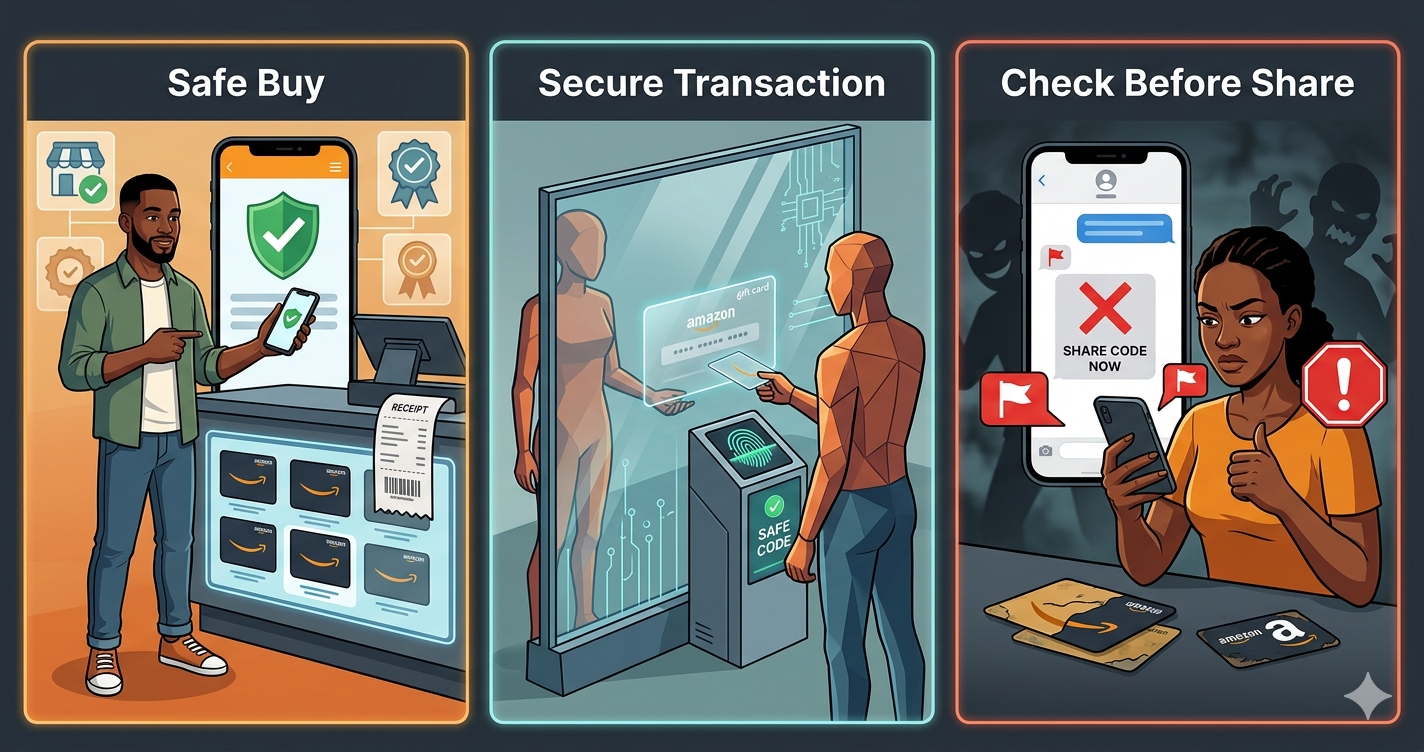
Why Amazon Gift Card Scams Are So Common
Amazon gift cards are easy to send, easy to redeem, and valuable in many countries. That convenience is exactly why scammers like them. Once a card code has been revealed and redeemed, it can be difficult to reverse the loss, especially if the person who received the code used a fake name, a temporary phone number, or a social media account that disappears after the deal.
For many Nigerian users, Amazon gift cards appear in three common situations: someone receives a card from abroad and wants to sell it for Naira, a buyer wants to purchase a card for shopping, or a stranger asks for a card as payment. Each situation carries a different risk. The goal is not to fear every gift card transaction. The goal is to slow down, verify the request, and avoid giving away the most important detail too early: the claim code.
The First Rule: Never Treat a Gift Card Code Like a Screenshot
A gift card code is closer to cash than a normal receipt. A receipt may prove that a card was bought, but the code itself can spend the value. If a buyer, agent, friend, online lover, customer support account, or giveaway organizer asks you to send the full code before verification, that is a major warning sign.
Even partial screenshots can be risky if they reveal enough card details, purchase information, or barcode data. When sharing proof during a trade, cover the claim code clearly. If a platform requires upload for verification, use only the official app or website, not a random WhatsApp contact claiming to be an agent.
Common Amazon Gift Card Scam Signs Nigerian Users Should Watch For
1. Someone asks for payment with an Amazon gift card
Legitimate companies do not usually ask customers to settle bank issues, immigration fees, delivery charges, fines, loan fees, or job application fees with Amazon gift cards. If a person says the only way to solve an urgent problem is to buy an Amazon card and send the code, assume it is suspicious until independently verified.
2. A buyer offers a rate that is far above the market
High rates are attractive, especially when exchange rates are moving and people want quick cash. But a rate that is far above every known platform can be bait. Some fake buyers use inflated offers to make sellers rush. After collecting the code, they may claim the card was invalid, ask for another card, or block the seller completely.
3. The person refuses to use a traceable channel
A serious trade should leave records: order details, chat history, payment confirmation, platform transaction ID, and a clear support path. Be careful with anyone who insists on voice calls only, deletes chats, changes phone numbers, or avoids using a proper trading platform.
4. The request is emotional and urgent
Scammers often create pressure. They may say a relative is in trouble, a package is stuck, a lover needs help, a job slot will close, or a prize will expire. Urgency reduces careful thinking. If the request involves love, fear, emergency, or a promise of sudden money, pause before buying or sharing any card.
5. Customer support contacts you first
Fake support accounts are common on social media. They may copy a brand logo, use a similar username, and ask for card details to “verify” your complaint. Real support should not need your full gift card claim code in a public chat. Start support conversations only from the official website, official app, or verified contact channels.
A Safe Checklist Before Selling an Amazon Gift Card
- Check the platform: Use a known app or website with a clear transaction process, support channel, and payment record.
- Confirm the rate before upload: Gift card rates can change by card type, country, receipt status, and market demand.
- Do not trade from pressure: If the buyer is rushing you, slow down.
- Protect the code: Do not send the full claim code to a random person for “checking.”
- Keep evidence: Save receipts, transaction IDs, chat records, and payment confirmations.
- Verify payment: Do not release additional details because someone sent a fake bank alert.
What to Do If You Already Shared the Code
If you have shared an Amazon gift card code with a suspicious person, act quickly. First, check whether the card value is still available. If it has not been redeemed, avoid sending the code again and move the card only through a safe channel. If it has been redeemed, gather evidence immediately: screenshots, phone numbers, usernames, bank details, receipts, and timestamps.
Report the case to the platform where the conversation happened. If a trading app was involved, contact its official support. If the scam used bank details, contact your bank and request guidance. You can also report cybercrime or fraud concerns through appropriate local channels. Recovery is not guaranteed, but reporting helps create a record and may prevent the same account from targeting other people.
How Buyers Can Avoid Fake Amazon Gift Cards
Sellers are not the only people at risk. Buyers can also lose money by paying for already-redeemed or fake cards. Avoid buying cards from anonymous pages with no history, no refund policy, and no verifiable support. A cheap card can become expensive if it does not work.
Before buying, confirm the card type, country, balance, delivery method, and any usage limits. If you plan to use the card on Amazon, make sure it matches the correct Amazon marketplace. A card meant for one region may not work the way you expect on another region’s website.
Why Safe Trading Habits Matter More Than Luck
Many scam victims are not careless. They are often rushed, pressured, or tempted by a rate that looks better than normal. The safer approach is to build simple habits: never expose codes casually, verify support channels, avoid emotional payment requests, and keep transaction evidence.
Amazon gift cards can still be useful for shopping, gifting, and converting value when handled properly. But the safest trader is not the person who knows every scam story. It is the person who refuses to skip verification when money is involved.
FAQ
Can someone redeem my Amazon gift card with only the code?
Yes. The claim code is the most sensitive part of the card. If someone has enough valid code details, they may be able to redeem the value.
Is every high Amazon gift card rate a scam?
No, rates can vary. However, a rate that is far above normal should make you verify the buyer, platform, and process before sharing any card details.
Should I send my Amazon gift card code for verification?
Only use official app or website verification channels. Do not send full codes to random social media contacts or unofficial support accounts.