Blog
Bitcoin vs Gift Cards: Which Is a Better Store of Value for Nigerians?
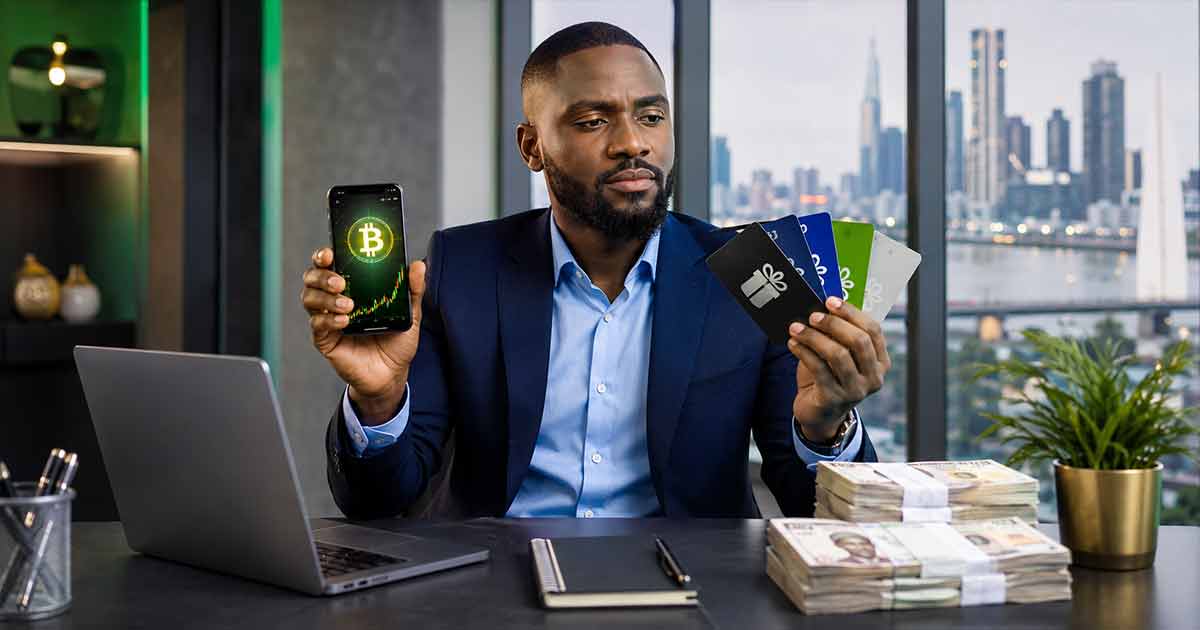
Bitcoin vs Gift Cards: Which Is a Better Store of Value for Nigerians?
In Nigeria, the question of how to hold value is not academic. With the Naira losing purchasing power year after year, Nigerians have been forced to think creatively about where to keep money. Two options that come up frequently in online discussions are Bitcoin and gift cards. Both are dollar-adjacent, both can be converted to Naira, and both have active markets in Nigeria.
But they're very different instruments with different risk profiles, liquidity characteristics, and practical use cases. This guide compares them honestly so you can make an informed decision.
What We Mean by "Store of Value"
A store of value is something that holds its purchasing power over time. Gold is the classic example. The Nigerian Naira has been a poor store of value because inflation and devaluation erode its purchasing power.
When Nigerians look at Bitcoin or gift cards as stores of value, they're really asking: "Is this better than holding Naira?" That's the relevant comparison, not whether Bitcoin or gift cards are perfect stores of value in absolute terms.
Bitcoin as a Store of Value in Nigeria
The Case For Bitcoin
Bitcoin has a fixed supply of 21 million coins. No government or central bank can print more of it. This makes it structurally resistant to the kind of inflation that erodes Naira purchasing power.
Over long time horizons (3-5+ years), Bitcoin has significantly outperformed the Naira. Nigerians who bought Bitcoin in 2019 and held through the volatility have seen substantial gains in Naira terms, even accounting for Bitcoin's price drops.
Bitcoin is also globally liquid. You can sell it anywhere in the world, 24/7, without needing a specific buyer in Nigeria. This makes it more portable than almost any other asset.
For Nigerians receiving payments from abroad, Bitcoin offers a way to receive dollar-equivalent value without going through the banking system, which can be slow, expensive, and subject to CBN restrictions.
The Case Against Bitcoin
Bitcoin's volatility is extreme. It's not unusual for Bitcoin to drop 50-70% from its peak within a single year. If you need to convert to Naira at a specific time — to pay rent, school fees, or a medical bill — you might be forced to sell at a significant loss.
This volatility makes Bitcoin a poor store of value for short-term needs. If you're holding value for 3-6 months, Bitcoin's price swings can easily wipe out any gains from Naira depreciation.
Bitcoin also requires technical knowledge to hold safely. Self-custody (holding your own private keys) is the most secure approach but requires understanding of wallets, seed phrases, and security practices. Using exchanges is simpler but introduces counterparty risk — Nigerian crypto exchanges have had issues with withdrawals and regulatory pressure.
The regulatory environment for crypto in Nigeria has been volatile. The CBN has at various points restricted banks from servicing crypto exchanges, creating friction for converting Bitcoin to Naira. While P2P markets have filled this gap, the regulatory uncertainty is a real risk.
Gift Cards as a Store of Value in Nigeria
The Case For Gift Cards
Gift cards are dollar-denominated, which means they hold their value against Naira depreciation in the same way that holding dollars does. A $100 Amazon gift card is worth $100 regardless of what happens to the Naira.
Gift cards are simple to hold. There's no wallet, no private key, no technical setup. You have a code — either written down or in an email — and that code represents value.
For people who receive gift cards as payment for work or as gifts, they're already in the ecosystem. Converting to Naira when needed is straightforward through verified platforms.
Gift cards also have a specific, defined value. A $100 Amazon gift card is worth exactly $100 on Amazon. There's no price discovery, no volatility, no wondering what it's worth today versus yesterday.
The Case Against Gift Cards
Gift cards are not a true store of value in the investment sense. They don't appreciate. A $100 Amazon gift card will always be worth $100 on Amazon — it won't become worth $150 over time. You're preserving dollar value, not growing it.
Gift cards have expiry considerations and platform risk. If Amazon changes its gift card policies, or if the platform you're using to sell them changes its rates or shuts down, your options narrow.
The secondary market rate for gift cards is always below face value. When you sell a $100 Amazon gift card for Naira, you receive less than the dollar equivalent at the official exchange rate. The discount varies but is typically 10-30% below the official rate. This means gift cards are not a perfect dollar equivalent — they're a discounted dollar equivalent.
Gift cards are also not universally liquid. You need a buyer who wants that specific card type. Amazon cards are highly liquid in Nigeria, but more obscure card types may be harder to sell quickly.
Security is a concern. Gift card codes are like cash — if someone gets your code, they can use it. Unlike Bitcoin (where you control the private key) or a bank account (which has fraud protection), a stolen gift card code is usually unrecoverable.
Direct Comparison
Volatility
Bitcoin: High. Can move 10-20% in a single day. Long-term trend has been upward, but short-term is unpredictable.
Gift Cards: Low. Value is fixed in dollar terms. The only volatility is the USD/NGN exchange rate, which moves much more slowly than Bitcoin.
Liquidity
Bitcoin: Very high globally. In Nigeria, converting to Naira requires P2P markets or exchanges, which adds friction but is generally manageable.
Gift Cards: High for popular types (Amazon, iTunes, Steam). Lower for obscure types. Requires a buyer in the Nigerian market.
Ease of Use
Bitcoin: Moderate to complex. Requires wallet setup, understanding of private keys, and navigating exchanges or P2P platforms.
Gift Cards: Simple. Receive a code, sell it on a platform. No technical knowledge required.
Scam Risk
Bitcoin: Moderate. Crypto scams exist (fake exchanges, rug pulls, phishing), but Bitcoin itself is secure if you hold your own keys.
Gift Cards: High in informal markets. Telegram gift card scams are extremely common in Nigeria. Using verified platforms reduces this risk significantly.
Growth Potential
Bitcoin: High. Has historically outperformed most assets over long time horizons, though with significant volatility.
Gift Cards: None. Gift cards preserve dollar value but don't grow it.
Regulatory Risk
Bitcoin: Moderate to high in Nigeria. CBN has restricted crypto-related banking at various points. Regulatory environment is uncertain.
Gift Cards: Low. Gift card trading is not specifically regulated in Nigeria and operates in a relatively clear legal space.
Practical Use Cases
When Bitcoin Makes More Sense
- You're holding value for 1+ years and can tolerate volatility
- You want exposure to potential upside, not just dollar preservation
- You're comfortable with the technical requirements of secure storage
- You're receiving international payments and want a fast, low-cost settlement option
When Gift Cards Make More Sense
- You received gift cards as payment or as a gift and need to convert to Naira
- You want to hold dollar value for a short period (weeks to a few months) without volatility risk
- You're not comfortable with crypto wallets and private key management
- You need a simple, low-friction way to preserve value against Naira depreciation
The Honest Answer
Bitcoin and gift cards serve different purposes. They're not really competing for the same use case.
Bitcoin is a speculative asset with store-of-value properties over long time horizons. It's appropriate for people who can tolerate volatility and are thinking in years, not months.
Gift cards are a practical tool for people who have received dollar-denominated value and need to convert it to Naira efficiently. They're not an investment vehicle — they're a conversion mechanism.
For most Nigerians, the question isn't "Bitcoin or gift cards?" It's "I have this gift card, how do I convert it safely?" or "I want to hold some dollar value, what's the best way?" Those are different questions with different answers.
If you're holding gift cards, use a verified platform to convert them when you need Naira. If you're thinking about long-term value storage, Bitcoin is worth understanding — but go in with clear eyes about the volatility and the technical requirements.