Blog
Buy Now Pay Later in Nigeria: How BNPL Works and the Best Apps to Use in 2026
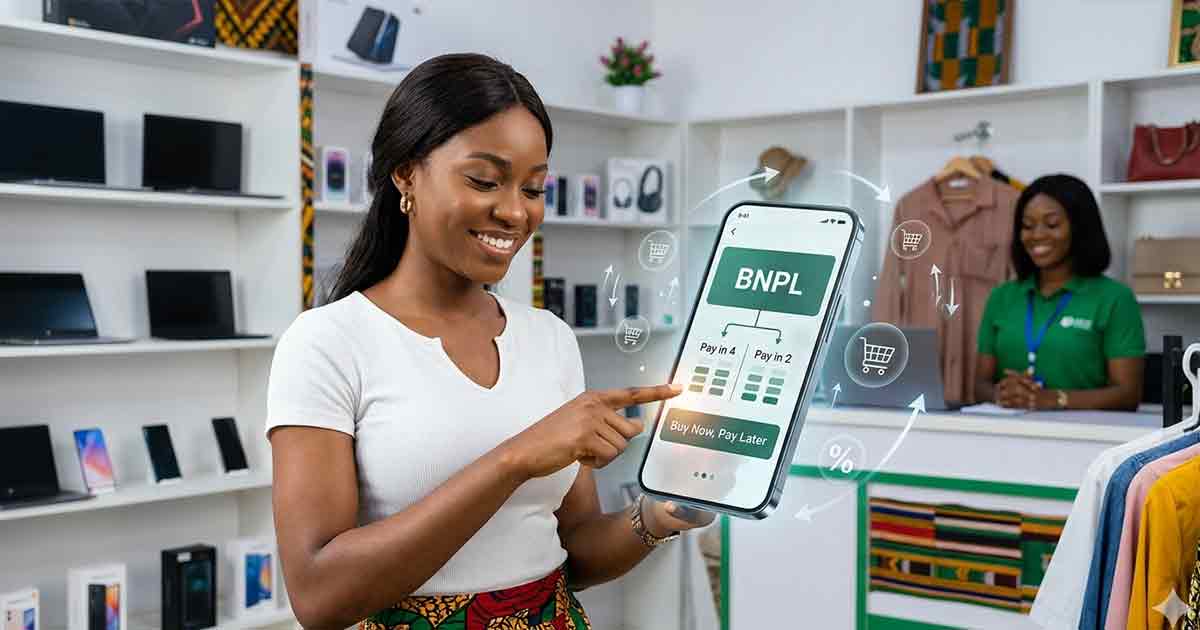
What Is Buy Now Pay Later (BNPL)?
Buy Now Pay Later - commonly called BNPL - is a short-term financing option that lets you get a product or service immediately and spread the cost across fixed instalments over weeks or months. Unlike a traditional bank loan, BNPL is built for speed: you apply at checkout, get approved in minutes, and walk away with what you need. No collateral, no paperwork mountain.
In Nigeria, where access to formal credit has historically been restricted to salaried workers with bank accounts and documented income, BNPL is quietly changing who can afford what - and when. Whether you want a new smartphone, a washing machine, school fees, or even groceries, BNPL providers are stepping in where banks didn't.
How BNPL Works in Nigeria
The model is straightforward, but the details matter:
- You select an item from a partner merchant or the BNPL platform's own store.
- You apply for financing directly on the app or at the point of sale. The provider checks your eligibility - typically using your BVN, income history, or phone usage data.
- You make a small upfront payment (sometimes zero, sometimes 10-30% of the total price).
- You receive the item and repay the balance in weekly or monthly instalments over an agreed period - usually 3 to 12 months.
- Interest or service fees may apply depending on the provider and plan. Some plans are zero-interest if repaid on time; others carry a monthly fee of 3-5%.
Most Nigerian BNPL providers rely on alternative credit scoring - not your credit bureau report, but your phone bill payments, bank transaction frequency, BVN data, or even airtime usage patterns. This opens access to millions of Nigerians who would otherwise be invisible to a commercial bank's credit department.
Top BNPL Apps in Nigeria (2026)
1. CDcare
CDcare is one of the most widely used BNPL platforms in Nigeria, focused specifically on electronics and home appliances. Users can shop for items like phones, generators, refrigerators, and laptops through the CDcare app, pay a small deposit, and spread repayment over 3 to 12 months.
CDcare uses a savings-first model: you contribute weekly instalments into your CDcare wallet, and once you have enough, the item is released to you. It's a disciplined approach that reduces default risk while keeping the purchase accessible. There's no interest charged in the traditional sense - the price you see is the price you pay.
Best for: Mid-range electronics, home appliances, smartphones.
Repayment: Weekly savings contributions over 3-12 months.
Eligibility: Anyone with a verified phone number and BVN.
2. CredPal
CredPal operates more like a buy now, pay later credit card for Nigerians. Once approved, users receive a credit limit they can spend at any of CredPal's partner merchants - both online and offline. Think of it as a revolving credit facility with a BNPL twist.
CredPal has partnerships with major Nigerian retailers and e-commerce platforms. Repayment is monthly, and interest rates vary based on your credit profile. The platform also reports to credit bureaus, which means using CredPal responsibly can actually help you build a credit history in Nigeria.
Best for: Repeat shoppers, building credit history, e-commerce purchases.
Repayment: Monthly, with flexible tenure options.
Interest rate: Varies by profile; typically 3-5% monthly on unpaid balance.
3. Carbon Zero
Carbon Zero is the BNPL arm of Carbon (formerly Paylater), one of Nigeria's oldest digital lenders. Through Carbon Zero, customers can split purchases into interest-free instalments when shopping at partner stores. The zero-interest offering is the standout - Carbon absorbs the cost by charging merchants a transaction fee instead.
If you already use the Carbon app for savings or loans, you can access Carbon Zero directly within the same app. Carbon's existing credit scoring infrastructure means faster approval decisions for existing users.
Best for: Zero-interest instalment plans, existing Carbon app users.
Repayment: 3 equal instalments (typically monthly).
Interest: Zero for shoppers; merchants pay a service fee.
4. Easybuy
Easybuy (operated by Newedge Finance Limited) focuses exclusively on smartphones and home electronics, with a physical presence across thousands of partner stores nationwide. Rather than a digital-only experience, Easybuy is deeply embedded in offline retail - walk into a partner store, show your ID, pay a deposit, and leave with your device.
The platform expanded aggressively in 2026, launching a Sales Talent Program to recruit 10,000 agents across Nigeria. With over 4,500 partner stores and a presence in multiple African countries, Easybuy is one of the largest BNPL operators on the continent by retail footprint.
Best for: Smartphones, electronics, offline purchase journeys.
Repayment: Fixed monthly instalments over 3-12 months.
Availability: Nationwide via partner stores and Easybuy app.
5. Payhippo
Payhippo targets small business owners rather than individual consumers. If you run a shop and need to stock inventory without draining your working capital, Payhippo provides short-term credit to buy goods now and repay as sales come in. It's a B2B BNPL play - different from consumer platforms but essential for understanding the full BNPL ecosystem in Nigeria.
Best for: SME owners, retailers, inventory financing.
Repayment: Short-term, tied to business cash flow.
Note: Not designed for personal consumer purchases.
How to Apply for BNPL in Nigeria
The application process varies slightly across platforms, but the general steps are:
- Download the app (CDcare, CredPal, Carbon, Easybuy) or visit a partner store for offline providers.
- Register with your BVN and a valid ID (NIN, driver's license, or international passport).
- Complete identity and income verification. Some platforms ask for bank statements; others use alternative data like phone usage.
- Choose your item from the platform's catalog or a partner merchant.
- Select your repayment plan - most offer 3, 6, or 12-month options.
- Make the initial deposit or down payment if required.
- Receive your item or service and begin repayment on the agreed schedule.
Approval times range from a few minutes to 24 hours. First-time applicants may receive lower limits; consistent repayment history usually unlocks higher credit over time.
Pros and Cons of BNPL in Nigeria
The Upside
- Access without a bank loan: No collateral, no formal employment requirement for many platforms.
- Faster approval: Minutes versus weeks for a traditional loan.
- Zero-interest options: Platforms like Carbon Zero and some CDcare plans carry no interest if you stay on schedule.
- Builds credit history: Providers like CredPal report to credit bureaus, which helps future borrowing.
- Spreads the cost: Reduces the cash pressure of big purchases on a Nigerian salary cycle.
The Downside
- Price markup risk: Some items on BNPL platforms cost more than the open market price. Always compare before committing.
- Penalty fees for missed payments: Late fees can accumulate quickly, turning an affordable plan into an expensive one.
- Debt accumulation: Easy access can encourage over-commitment - especially if you're using multiple BNPL services at once.
- Limited product range: Most Nigerian BNPL providers are still focused on electronics and phones; options for other categories are growing but still limited.
- Naira volatility impact: If your income is in Naira but you're buying imported electronics priced in dollar-equivalent rates, the real cost can shift between application and completion of repayment.
Who Is BNPL Best For in Nigeria?
BNPL works well for people who:
- Have steady income but struggle to save a lump sum for big purchases.
- Need a smartphone or appliance for work but can't afford the upfront cost.
- Want to start building a credit profile without taking on a formal loan.
- Run a small business and need to stock inventory without wiping out working capital (Payhippo territory).
It's less suitable for people with irregular income who can't guarantee monthly repayments, or those already managing multiple debt obligations. The convenience of BNPL is also its trap - only use it when you've confirmed the repayment fits your actual budget.
Is BNPL Safe in Nigeria?
Regulated Nigerian BNPL providers operate under the oversight of the Central Bank of Nigeria (CBN) or are registered with the Federal Competition and Consumer Protection Commission (FCCPC). The FCCPC has been particularly active since 2022 in cracking down on predatory lending and illegal debt collection practices by Nigerian loan apps.
Before signing up to any BNPL service, check:
- Is the company registered and licensed? (Check CBN or CAC records.)
- Are the total repayment terms clearly disclosed before you commit?
- What happens if you miss a payment - and does their collection approach comply with FCCPC guidelines?
- Is there a clear complaints or dispute resolution channel?
The established platforms listed in this article - CDcare, CredPal, Carbon Zero, and Easybuy - are among the more transparent operators. That said, always read the fine print before your first instalment.
Final Word
Buy Now Pay Later is filling a real gap in Nigeria's consumer credit market. For millions of Nigerians who don't qualify for a bank loan but have consistent income and a purchase they genuinely need, BNPL offers a practical bridge. The key is using it with discipline: know your repayment schedule, compare the total cost against the cash price, and don't stack multiple BNPL plans at once.
In 2026, the Nigerian BNPL market is growing fast - more providers, more partner merchants, and more product categories than ever before. Whether you're buying a phone on CDcare, splitting a purchase via Carbon Zero, or stocking your shop with Payhippo, the infrastructure is more accessible than it's ever been. The question is whether you use it smartly.