Blog
Gift Card Denomination Guide: Which Dollar Amount Gives You the Best Rate in Nigeria?
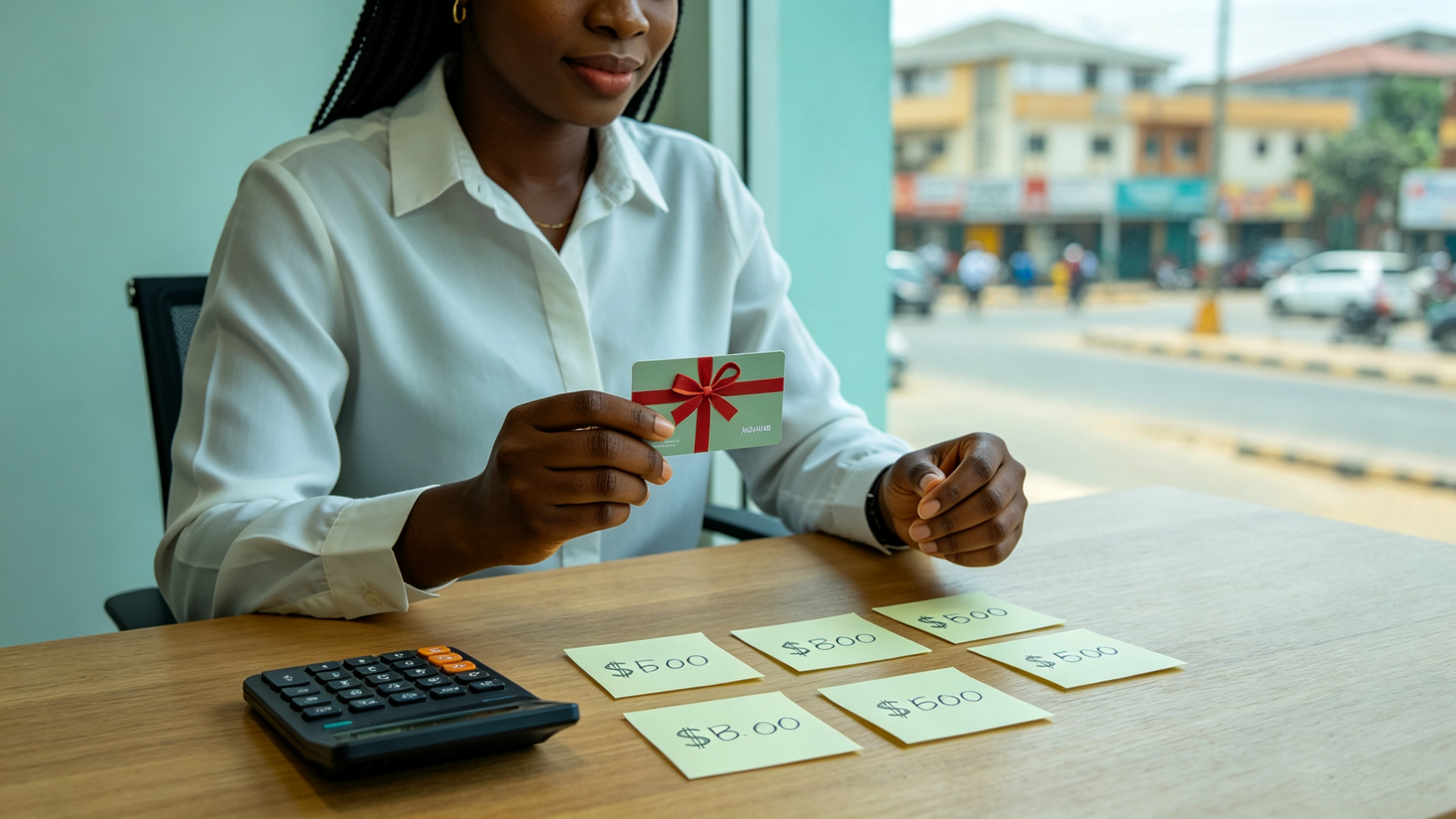
Denomination Matters More Than Most Traders Realize
If you trade gift cards in Nigeria, you have probably noticed that the rate you get is not just about the card type. A $100 Apple gift card and a $25 Apple gift card do not trade at the same rate per dollar. The denomination, the dollar amount on the card, directly affects how much naira you receive per dollar of face value.
Understanding this relationship can mean the difference between getting a good deal and leaving money on the table. This guide breaks down how denomination affects rates and which amounts give you the best value.
Why Denomination Affects the Rate
Gift card trading platforms and buyers price cards based on several factors, and denomination is one of the most important:
Processing cost per transaction
Every gift card transaction has a fixed processing cost: verification, customer support, platform fees, and payment processing. Whether the card is $25 or $500, the processing cost is roughly the same. On a $25 card, that fixed cost represents a larger percentage of the value. On a $500 card, it is a tiny fraction. This is why higher denominations typically get better rates.
Demand patterns
Different denominations have different demand levels. Mid-range denominations ($50-$100) tend to have the highest demand because they match common purchase patterns. Very low denominations ($5-$10) have low demand because the effort to process them is not worth the small value. Very high denominations ($200-$500) can have lower demand because fewer buyers need that much credit at once.
Fraud risk
Lower denomination cards are statistically associated with higher fraud rates. Scammers often test stolen card details by purchasing small gift cards first. This increased risk is priced into the rate, meaning lower denominations get slightly worse rates as a risk premium.
Rate Patterns by Card Type
Apple (iTunes) Gift Cards
Apple cards are the most traded gift cards in Nigeria, and denomination has a clear impact on rates:
- $5-$15 cards: lowest rate per dollar. The processing overhead makes these barely worth trading for small quantities. Some platforms set minimum trade amounts that exclude these denominations entirely.
- $25 cards: moderate rate. Acceptable for trading but not optimal.
- $50 cards: good rate. This is the sweet spot where processing costs are spread over a reasonable value and demand is strong.
- $100 cards: best or near-best rate. High demand, efficient to process, and the most popular denomination for trading.
- $200+ cards: rates may be slightly lower than $100 cards on some platforms due to reduced demand and higher verification requirements for large amounts.
Amazon Gift Cards
Amazon cards follow a similar pattern but with some differences:
- $25 cards: moderate rate.
- $50-$100 cards: best rates. Amazon $100 cards are consistently among the highest-demand denominations in the Nigerian market.
- $200-$500 cards: rates can actually be competitive because Amazon high-value cards are popular with resellers who use them for bulk purchasing.
Amazon also distinguishes between e-codes (digital) and physical cards, which affects rates independently of denomination. E-codes generally get slightly lower rates than physical cards because they are easier to generate fraudulently.
Google Play Gift Cards
- $10-$15 cards: low rates. Google Play small denominations are common gifts but not efficient for trading.
- $25-$50 cards: moderate to good rates.
- $100 cards: best rate. The $100 Google Play card is the most efficient denomination for trading.
Google Play cards generally trade at lower rates than Apple cards across all denominations because demand for Google Play credit is lower in the Nigerian trading market.
Steam Gift Cards
- $20 cards: moderate rate.
- $50 cards: good rate.
- $100 cards: best rate for Steam.
Steam cards have a niche market. Rates are generally lower than Apple or Amazon because the buyer pool is smaller (primarily gamers).
The Math: How Much Difference Does Denomination Make?
To illustrate the impact, here is a hypothetical example using approximate rate differences:
Suppose the base rate for a $100 Apple card is ₦1,050 per dollar. The rate structure might look like:
- $10 card at ₦900/dollar = ₦9,000 total
- $25 card at ₦950/dollar = ₦23,750 total
- $50 card at ₦1,000/dollar = ₦50,000 total
- $100 card at ₦1,050/dollar = ₦105,000 total
- $200 card at ₦1,030/dollar = ₦206,000 total
The difference between the $10 rate and the $100 rate is ₦150 per dollar. On $100 of total value, that is ₦15,000 difference just from choosing the right denomination.
These numbers are illustrative. Actual rates change daily based on market conditions. But the pattern, mid-to-high denominations getting better per-dollar rates, is consistent.
Strategies for Maximizing Your Rate
If you are buying cards to sell
- Buy $50 or $100 denominations whenever possible. The per-dollar rate is consistently better than smaller cards.
- Avoid $5 and $10 cards unless you are buying them at a significant discount. The trading rate makes them inefficient.
- If you have a choice between two $50 cards and one $100 card (same total value), the $100 card will usually get a slightly better rate.
If you received cards as gifts
- Small denomination cards ($5-$15) may not be worth the effort to trade individually. Consider accumulating several and trading them together, or using them yourself for app purchases and subscriptions.
- If you have multiple small cards of the same type, some platforms allow you to trade them as a batch, which may get a slightly better rate than trading individually.
If you are a regular trader
- Track rate differences across denominations on your preferred platform. Some platforms have larger denomination premiums than others.
- Time your trades. Denomination rate gaps can widen or narrow based on market demand. During high-demand periods (holidays, sales events), even smaller denominations may get improved rates.
- Compare rates across platforms for each denomination. Platform A might offer the best rate for $100 cards while Platform B is better for $50 cards.
When Smaller Denominations Make Sense
Despite the rate disadvantage, there are situations where smaller denominations are the right choice:
- Personal use: if you need $15 of App Store credit, buying a $15 card is more practical than buying a $100 card and having $85 sitting unused.
- Gifting: a $25 card is a common gift amount. The recipient's convenience matters more than the trading rate.
- Testing a new platform: if you are trying a new trading platform for the first time, start with a small denomination to test the process before committing larger amounts.
- Risk management: if you are unsure about a card's validity, trading a $25 card limits your potential loss compared to a $100 card.
The Bottom Line
If you are trading gift cards for profit in Nigeria, denomination selection is one of the easiest ways to increase your returns. The $50-$100 range consistently offers the best per-dollar rates across all major card types. Below $25, the rates drop noticeably. Above $200, rates may plateau or slightly decrease depending on the platform and card type.
Check your platform's current rates for each denomination before trading. The few minutes spent comparing can add up to significant naira over time.