Blog
How to Avoid Fake POS Agents in Nigeria: Safety Tips for Cash Withdrawals and Transfers
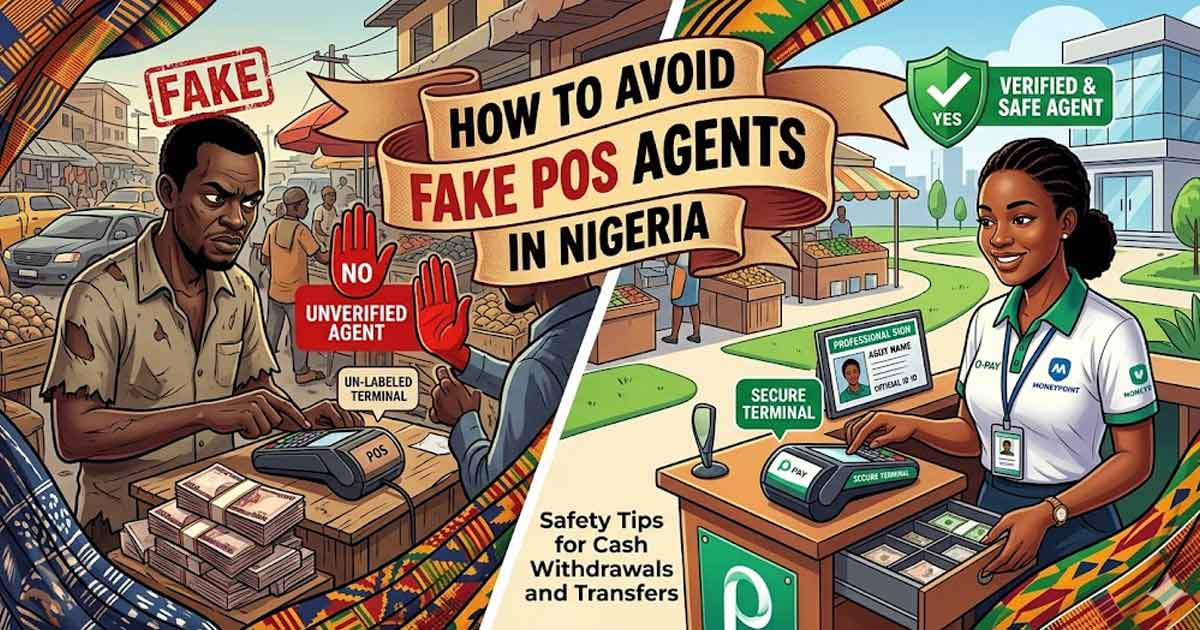
POS Agents Solve a Real Problem in Nigeria
POS agents are essential in many parts of Nigeria. They help people withdraw cash, transfer money, buy airtime, and make quick banking transactions without visiting a bank branch or ATM. In areas where ATM access is poor or unreliable, POS agents are the most practical option.
But the same convenience that makes POS agents useful also creates room for fraud. Fake agents, cloned terminals, false transfer claims, and PIN theft have all become common risks. This guide explains how to protect yourself.
What Makes a POS Agent Risky?
A fake or unsafe POS agent is not always someone with no machine. Sometimes it is a real-looking setup run by someone using deceptive tactics. Risk comes from three things:
- Lack of traceability
- Pressure to hurry through the transaction
- Attempts to gain access to your card, PIN, or transfer proof beyond what is necessary
The danger is not just losing the cash in front of you. It is exposing your bank details in a way that can lead to later fraud.
Warning Signs to Watch For
1. No clear business location
An agent operating in a random corner, roadside spot, or temporary stand with no stable setup is riskier than one with an established location. A fixed shop does not guarantee safety, but it increases traceability.
2. Unusual urgency
If the agent rushes you, discourages you from checking alerts, or says things like "network is bad, just trust me," slow down immediately. Fraud relies on pressure.
3. Refusal to issue receipts
A serious agent should be willing to provide at least a printed or digital transaction record where applicable. Someone who resists any documentation is harder to hold accountable.
4. Asking for your PIN verbally
No legitimate POS agent should ask you to say your card PIN out loud. You should always enter it yourself privately.
5. Request to hold your card longer than necessary
The longer your card is out of your control, the greater the risk of card swapping, skimming, or hidden detail capture.
How to Use a POS Agent Safely
Keep your card in sight
Never allow your card to disappear into a back room or under a counter. If the terminal is not near you, ask the agent to bring it closer.
Enter your PIN yourself
Shield the keypad with your hand and enter the PIN privately. Do not let bystanders or the agent watch. If the device position makes privacy impossible, do not continue.
Check the amount before confirming
Always confirm the exact amount displayed on the terminal screen before entering your PIN. Some fraud cases involve entering a higher amount than what was verbally agreed.
Wait for confirmation from your bank
For transfers and cash withdrawals, do not rely only on what the agent says. Check your bank app, SMS alert, or balance confirmation before leaving.
Extra Caution for Transfer-Based Transactions
Some agents ask customers to transfer money directly to their personal or business account instead of using the POS machine. This is common, but it carries its own risks.
Problems that happen
- The agent claims not to have received the transfer even when you have sent it
- The customer sends to the wrong account because of poor verification
- The transfer is delayed, creating arguments about whether payment was made
How to reduce the risk
- Verify the account number and name before sending
- Show the transfer receipt only after you confirm the details yourself
- Use your bank app to check whether the transaction is marked successful
- Stay at the location until the agent confirms receipt
If the agent becomes aggressive or tries to seize your phone during the process, leave immediately if it is safe to do so and seek help nearby.
Choose Agents with Better Traceability
When possible, prefer agents who:
- Operate from a known shop
- Are used regularly by people in the area
- Display business branding clearly
- Have multiple customers and an active transaction history
- Are located near other businesses, not in isolated areas
In practice, community reputation is one of the strongest filters in Nigeria. A known neighborhood agent is usually safer than a random first-time operator.
Protecting Your Card After a Suspicious Transaction
If something about a POS transaction feels wrong, do not wait to see what happens. Act immediately.
- Lock your card through your banking app if your bank supports that feature
- Change your card PIN as soon as possible
- Review recent transactions for anything unusual
- Contact your bank to report suspected compromise
- Request card replacement if you think your card details were exposed
Fast action matters. Many POS-related fraud losses happen because people notice the risk but wait too long to react.
What to Do If You Are Debited but Do Not Receive Cash
This is one of the most common POS problems in Nigeria. It may be fraud, but it can also be a genuine network failure.
Immediate steps
- Do not leave without documenting the transaction
- Take note of the amount, time, location, and agent details
- Keep the receipt if one was issued
- Report to your bank immediately through the app, hotline, or branch
If it was a failed transaction due to network issues, reversal may happen automatically. If it does not, you will need the details for a dispute.
Cash Safety Still Matters Too
Even when the transaction itself is legitimate, carrying cash away from a POS stand creates another layer of risk. Avoid counting large amounts openly. Put the cash away quickly, especially in crowded or exposed areas. If you are withdrawing a large amount, go with someone you trust or choose a more secure location.
The Best Habit: Slow Down
Most POS fraud works because the customer is in a hurry. They need cash fast, trust the setup instantly, and stop checking details. The simplest protection is to slow down. Check the amount. Check the terminal. Check the transfer. Keep your card in sight. Enter your PIN privately. Confirm before leaving.
POS agents are useful and often necessary in Nigeria. You do not need to avoid them completely. You just need to treat every transaction like real banking, because that is exactly what it is.