Blog
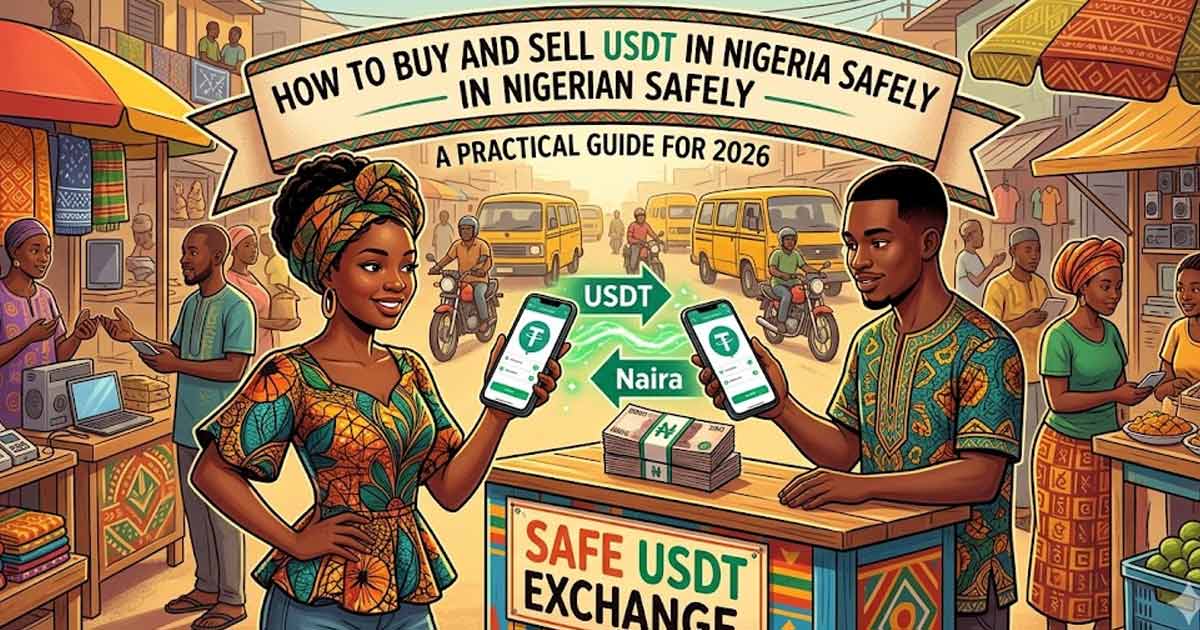
How to Buy and Sell USDT in Nigeria Safely: A Practical Guide for 2026
Why USDT Has Become a Practical Financial Tool in Nigeria
USDT, also known as Tether, is a stablecoin pegged to the US dollar. Unlike Bitcoin or Ethereum, its value does not swing wildly from day to day. For Nigerians, this stability makes it useful beyond speculation. Many people now use USDT to store value against naira depreciation, pay for international services, receive freelance income, and move money across borders without traditional banking friction.
But buying and selling USDT in Nigeria comes with real risks. Scams, frozen bank accounts, bad exchange rates, and unreliable counterparties are all common problems. This guide explains how to trade USDT safely and practically.
How USDT Trading Works in Nigeria
Since direct crypto-to-naira exchange through centralized platforms has faced regulatory pressure in Nigeria, most USDT trading happens through peer-to-peer (P2P) methods. In a P2P trade:
- You find a counterparty on a platform or through a trusted contact.
- You agree on a rate and amount.
- One party sends naira via bank transfer while the other releases USDT from escrow.
- The platform holds the crypto in escrow until both sides confirm.
The escrow step is critical. Without it, you are trusting a stranger to complete their side of the deal, which is where most fraud happens.
Choosing a Safe Trading Method
P2P platforms with escrow
The safest way to trade USDT in Nigeria is through a platform that holds the crypto in escrow during the transaction. This means the seller cannot disappear with both the naira and the USDT. Look for platforms that:
- Lock the USDT in escrow before the buyer sends naira
- Have a dispute resolution process
- Show trader ratings and completion history
- Require identity verification for both parties
Direct trades with trusted contacts
Some Nigerians trade USDT directly with people they know personally. This can work if trust is established, but it offers no protection if something goes wrong. There is no escrow, no dispute process, and no record beyond your chat history.
Avoid random social media traders
Trading USDT through Instagram, Telegram groups, or Twitter contacts with no escrow is one of the fastest ways to lose money. Scammers create convincing profiles, offer attractive rates, and vanish after receiving payment.
Common USDT Scams in Nigeria and How to Avoid Them
Fake payment confirmation
The buyer sends a forged bank transfer screenshot and pressures the seller to release USDT before the actual naira lands. Always verify the payment in your own bank app or statement. Never rely on screenshots alone.
Reversed bank transfers
Some scammers send naira from a compromised or disputed account. The transfer initially appears successful, but the bank later reverses it. To reduce this risk, prefer trading with verified users who have a long transaction history on the platform.
Man-in-the-middle scams
A scammer positions themselves between two legitimate traders, collecting naira from one and USDT from the other without completing either side properly. Only trade through the official platform interface, and never move communication to external channels mid-trade.
Fake USDT tokens
On certain blockchain networks, scammers can create tokens that look like USDT but have no value. Always verify the token contract address and use the correct network when receiving USDT. The most common legitimate networks for USDT are Tron (TRC-20) and Ethereum (ERC-20).
Understanding Fees and Exchange Rates
When buying or selling USDT in Nigeria, the effective cost includes:
- The spread between the buy and sell rate on the platform
- Network transaction fees when sending USDT between wallets
- Any platform trading fee
- The difference between the P2P rate and the actual market rate
TRC-20 transfers are generally cheaper than ERC-20 transfers. If you are moving USDT frequently, choosing the right network can save meaningful amounts over time.
Protecting Your Bank Account
One of the biggest concerns for Nigerian USDT traders is the risk of bank account restrictions. Banks sometimes flag accounts that receive frequent transfers from multiple unknown sources, which is common in P2P trading.
To reduce this risk:
- Use a dedicated account for crypto trading rather than your primary savings or salary account
- Keep transaction amounts consistent and avoid patterns that look suspicious
- Maintain records of your trades in case your bank asks for explanation
- Respond promptly to any bank inquiry rather than ignoring it
This does not guarantee protection, but it reduces the chance of disruption to your main banking relationship.
Practical Uses of USDT for Nigerians
Store of value
Holding USDT protects against naira depreciation without the volatility of other cryptocurrencies. It is not a perfect savings tool, but it preserves dollar-equivalent value better than keeping everything in naira during periods of rapid devaluation.
International payments
USDT can be sent across borders quickly and cheaply compared to traditional wire transfers. Freelancers, small business owners, and anyone who needs to pay for international services can use USDT as a bridge currency.
Subscription and service payments
Some international services and platforms accept crypto payments directly. Even when they do not, USDT can be converted to other payment methods more efficiently than going through traditional forex channels in some cases.
How Much Should You Start With?
If you are new to USDT trading in Nigeria, start small. Make your first few trades with amounts you can afford to lose while you learn how the process works. Pay attention to:
- How long the escrow process takes
- How quickly naira settles in your account
- What the actual effective rate is after all fees
- How responsive the platform support is if something goes wrong
Once you are comfortable with the mechanics, you can increase your trade sizes gradually.
Key Takeaways
- Always use escrow-based platforms for P2P USDT trades
- Verify payments in your own bank app, not from screenshots
- Use TRC-20 for cheaper network fees when possible
- Keep a separate bank account for trading activity
- Start with small amounts until you understand the process
- Avoid social media traders with no escrow or verification
USDT is a genuinely useful tool for Nigerians navigating a complex financial environment. But like any financial tool, it requires caution, verification, and a clear understanding of the risks involved.