Blog
How to Check a Gift Card Before Trading It in Nigeria
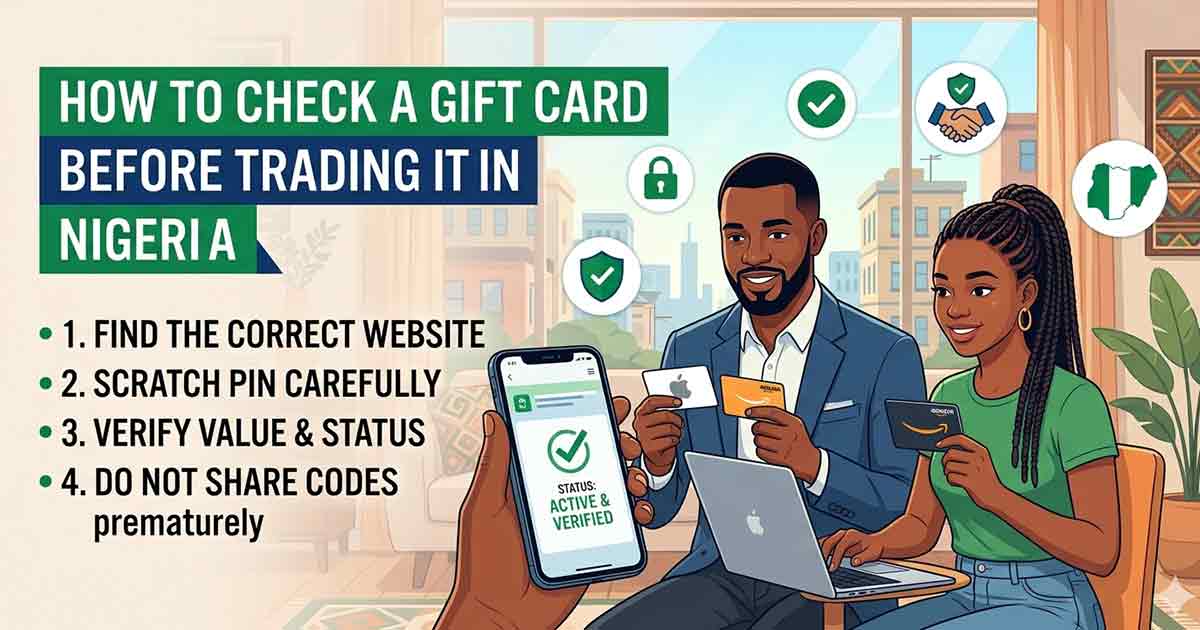
Many gift card trade problems start before the card ever reaches a trading app. A wrong country, unclear receipt, partially used balance, or exposed code can turn a normal trade into a rejected transaction. If you are selling a gift card for Naira or USDT in Nigeria, the safest move is to check the card properly before you submit it.
This guide explains what to inspect, what not to do while checking, and how to reduce the risk of losing card value during verification.
Research brief
Search intent: Nigerian users want to know how to confirm that a gift card is valid before selling it for cash. The intent is practical and risk-focused, not just informational.
Competitor structure: The reviewed Nosh article explains Google Play gift card trading, verification, platform choice, common mistakes, legal context, and FAQs.
Content gap: The competitor focuses on one card type and platform-led selling steps. It does not give a reusable pre-trade inspection checklist for different card brands.
Original value added: This article adds a cross-card checklist, a decision table, safer balance-checking rules, and a Nigerian trader's pre-submission workflow.
E-E-A-T risk check: No guaranteed rates or payout claims are made. Readers are advised to use verified platforms, avoid sharing codes outside secure forms, and confirm current platform rules before trading.
Why checking your gift card first matters
A gift card code is almost the same as cash. Once someone sees and redeems it, the value may be gone. That is why you should not treat verification as a casual WhatsApp conversation with a buyer. You need to confirm enough information to avoid rejection, but you must not expose the code to the wrong person.
For Nigerian traders, the most common reasons for gift card rejection include:
- The card has already been redeemed.
- The card country is different from what the seller declared.
- The receipt does not match the card amount or purchase date.
- The card image is blurry, cropped, or missing key details.
- The trader entered the wrong card type or subcategory.
- The code was previously shared with an individual buyer or social media contact.
Pre-trade checklist for any gift card
Before opening a trade, check these details:
| What to check | Why it matters | What to do |
|---|---|---|
| Card brand | Different brands have different rates and rules. | Confirm whether it is Apple, Amazon, Steam, Google Play, Sephora, Visa, or another brand. |
| Country or region | A US card is not the same as a UK, EU, Canada, or Australia card. | Check the receipt, email delivery note, packaging, or store region before selecting a category. |
| Denomination | Wrong value entry can delay verification. | Confirm the printed or emailed amount before submitting. |
| Redemption status | Redeemed cards usually cannot be traded. | Use only official balance or redeem pages carefully, and do not complete redemption into your own account. |
| Receipt quality | Some platforms request proof of purchase for fraud control. | Keep the receipt clear, uncropped, and consistent with the card amount. |
| Code privacy | Anyone with the code may use the value. | Do not send codes through DMs, comments, Telegram groups, or unverified buyers. |
How to check a gift card balance safely
The safest balance-checking method depends on the card brand. Some brands provide official balance pages. Others require careful checking through a redeem page. The key rule is simple: do not complete a redemption unless you plan to use the card yourself.
For example, a store may let you enter the code to view balance, but another brand may apply the card to your account once you proceed. If you are not sure, stop before the final confirmation screen and ask the trading platform's support team what proof they require.
Avoid third-party balance checker websites unless the brand officially links to them. Random balance checker pages can be phishing tools created to collect card codes.
Do not confuse checking with redeeming
This is one of the most expensive mistakes. Checking means confirming that a card is valid and unused. Redeeming means applying the value to an account. Once a card is redeemed, many platforms will reject it because the code is already spent.
If you are checking a card before trading, watch for phrases such as "add to account", "redeem now", "apply balance", or "confirm redemption". Those actions can consume the card value.
How to confirm the card country
Country matters because gift card markets do not value every region equally. A US Amazon card, UK Amazon card, and Germany Amazon card may have different demand, rate, and verification rules. Declaring the wrong country may lead to a failed trade even if the card is real.
Use these clues:
- Receipt currency: USD, GBP, EUR, CAD, or AUD can indicate the issuing market.
- Store domain: Amazon.com, Amazon.co.uk, or Amazon.de may point to different regions.
- Email sender and order details: Digital cards usually carry purchase information.
- Packaging language: Physical cards may show region-specific terms or support details.
- Retailer location: A receipt from a US store is stronger proof than a screenshot with no source.
What a good receipt should show
A receipt does not guarantee that a card will be accepted, but it helps a platform verify ownership and reduce fraud. A useful receipt should show the purchase date, card amount, store name, payment confirmation, and enough transaction detail to connect it to the card.
Do not edit receipts to hide important details unless the platform specifically tells you what to blur. Over-edited receipts can look suspicious. At the same time, avoid sending sensitive bank card numbers or private identity documents unless the platform has a secure upload channel and a clear reason for requesting them.
Red flags before you submit a card
Stop and re-check if you notice any of these signs:
- The buyer offers a rate far above normal market quotes and pressures you to send the code first.
- The platform has no app, no website, no terms, and only operates through personal DMs.
- The buyer refuses escrow, verification, or any traceable transaction process.
- The card receipt does not match the value you were told.
- The code has already been shared with someone else.
- The platform asks you to redeem the card into your own account before trading.
A safer Nigerian workflow before trading
- Confirm the card brand and country from the receipt or delivery email.
- Check whether the platform supports that exact card category.
- Compare live quotes, but ignore unrealistic rates that look like bait.
- Read the platform's submission rules before uploading the card.
- Prepare clear images or screenshots if proof is required.
- Enter the code only inside the verified platform form.
- Save your transaction ID until the trade is completed.
What to do if your card is rejected
Do not immediately send the same code to multiple strangers. First, ask the platform for the rejection reason. It may be a wrong category, wrong country, poor image quality, previous redemption, or a temporary verification issue.
If the platform provides a transaction ID, keep it. If you bought the card from someone else, return to the seller with the rejection reason and receipt request. If the card was exposed publicly, assume the risk is higher and avoid arguing with unknown buyers who cannot provide proof.
Final thoughts
Checking a gift card before trading is not just about getting a better rate. It protects you from rejection, delays, and code theft. The safest approach is to confirm the brand, country, balance, receipt, and platform rules before you reveal the code. If any part of the trade feels rushed or unclear, pause. A few minutes of checking can save the full value of the card.