Blog
How to Dispute a Wrong Bank Charge in Nigeria: Step-by-Step Process for Getting Your Money Back
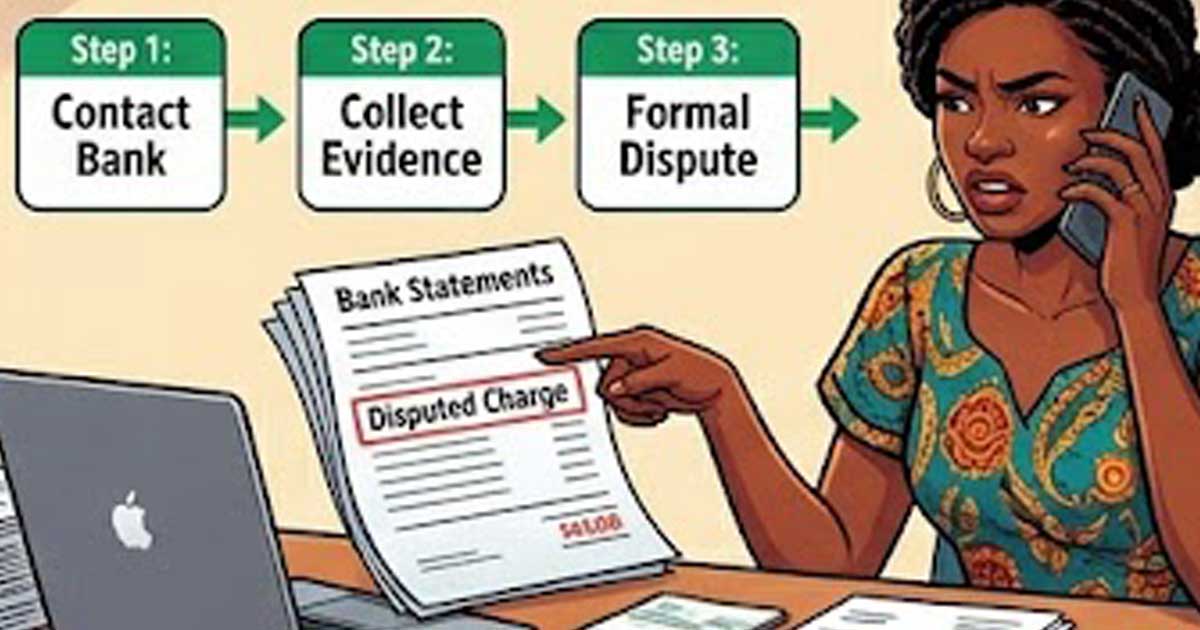
Wrong Bank Charges Happen More Often Than They Should in Nigeria
Unexpected debits, failed transfers that still deduct money, duplicate charges, unauthorized transactions, and mysterious fees are common complaints among Nigerian bank customers. Whether it is a POS transaction that failed but still debited your account, a subscription you did not authorize, or a transfer that went to the wrong person, knowing how to dispute the charge properly is essential.
Many Nigerians lose money simply because they do not know the dispute process or give up too early. This guide walks you through every step.
Step 1: Document Everything Immediately
As soon as you notice a wrong charge, gather evidence before doing anything else.
What to record
- The exact amount debited
- The date and time of the transaction
- The transaction reference number from your bank alert or statement
- The description or narration on the transaction
- Screenshots of your bank app showing the debit
- Any related SMS alerts
Do this immediately. Details fade, messages get deleted, and bank statements can be harder to access later. The stronger your documentation, the faster the resolution.
Step 2: Contact Your Bank's Customer Service
Your first point of contact is always your bank. Most Nigerian banks offer multiple channels:
Phone
Call your bank's customer service hotline. Have your account number, transaction details, and reference number ready. Ask for a complaint reference number or ticket ID before ending the call.
Send a formal email to your bank's customer service or dispute resolution email address. Include all transaction details, screenshots, and a clear description of the problem. Keep the email factual and specific.
In-app or online banking
Many Nigerian banks have dispute or complaint features built into their mobile apps. Use these when available, as they create an automatic record of your complaint.
Branch visit
If other channels are unresponsive, visit your bank branch. Bring printed evidence and ask to speak with a customer service officer. Request a written acknowledgment of your complaint.
Step 3: File a Formal Dispute
A casual complaint is different from a formal dispute. For wrong charges, you need to formally dispute the transaction.
What a formal dispute involves
- A written statement describing the unauthorized or incorrect charge
- Your account details and the specific transaction in question
- A request for investigation and reversal
- Supporting evidence such as screenshots, receipts, or correspondence
Some banks have specific dispute forms. Ask for the form or template if one exists. The more structured your submission, the harder it is for the bank to ignore.
Step 4: Understand the Timeline
Nigerian banking regulations set timelines for dispute resolution:
- Banks are expected to acknowledge your complaint promptly
- For failed electronic transactions where money was debited, banks are required to resolve or reverse within a specific timeframe set by CBN guidelines
- More complex disputes involving third parties or international transactions may take longer
Ask your bank for the expected resolution timeline when you file the dispute. If they cannot give you one, that is a red flag.
Step 5: Follow Up Consistently
Filing a dispute is not the end. Many disputes stall because the customer stops following up.
How to follow up effectively
- Reference your complaint ticket number in every follow-up
- Follow up every three to five business days if you have not received an update
- Keep records of every interaction including dates, names of agents, and what was said
- Use multiple channels if one is unresponsive
Polite persistence works better than anger. But be firm about timelines and your right to resolution.
Step 6: Escalate to the CBN If Your Bank Fails
If your bank does not resolve the dispute within a reasonable timeframe or refuses to act, you can escalate to the Central Bank of Nigeria.
How to file a CBN complaint
- Visit the CBN Consumer Protection page or use the CBN complaint portal.
- Provide your bank details, the disputed transaction, and evidence that you already complained to your bank.
- Include your bank's complaint reference number and any correspondence.
- Submit the complaint.
The CBN takes consumer complaints seriously, and banks generally respond faster once a CBN complaint is filed. This is your most powerful escalation tool.
Common Types of Wrong Charges and How to Handle Them
Failed transfer but money deducted
This is the most common issue. The transfer fails at the receiving end, but your account is still debited. Banks are required to reverse these within a set period. If automatic reversal does not happen, file a dispute immediately.
POS debit without receiving cash
You used a POS terminal, the transaction failed, but your account was debited. Document the POS location, time, and amount. Report to your bank and request a reversal.
Duplicate charges
You were charged twice for the same transaction. This often happens with online payments or card transactions. Provide evidence of both charges and request reversal of the duplicate.
Unauthorized transactions
Money was taken from your account without your knowledge or consent. This is potentially fraud. Report immediately, request an account freeze or card block if needed, and file a formal dispute.
Unexpected fees or charges
Your bank deducted fees you were not aware of. Ask for a breakdown of the charges. If they are not in your account terms or were not disclosed, dispute them.
What to Do If the Dispute Is Denied
If your bank denies your dispute:
- Ask for a written explanation of why it was denied.
- Review the explanation against your evidence.
- If you disagree, escalate to the bank's internal dispute resolution or ombudsman if they have one.
- File a complaint with the CBN.
- Consider seeking legal advice for large amounts.
Banks sometimes deny disputes initially hoping the customer will give up. Do not accept a denial without a clear, documented reason.
Preventing Wrong Charges
While you cannot prevent all errors, these habits reduce your risk:
- Enable transaction alerts for every debit on your account
- Review your bank statement at least weekly
- Do not share your card PIN, OTP, or banking credentials with anyone
- Lock your card through your banking app when not in use
- Be cautious with recurring subscriptions and cancel those you no longer need
- Use separate accounts for different purposes to make tracking easier
Your Rights as a Nigerian Bank Customer
Nigerian banking regulations protect consumers. You have the right to:
- Receive prompt resolution of legitimate disputes
- Get a clear explanation of any charges on your account
- Escalate unresolved complaints to the CBN
- Receive reversal of unauthorized transactions after investigation
Knowing your rights makes the dispute process less intimidating. Banks are required to treat your complaint seriously. If they do not, the CBN exists specifically to hold them accountable.
Bottom Line
Wrong bank charges in Nigeria are frustrating but not hopeless. Document everything, file a formal dispute, follow up consistently, and escalate to the CBN if needed. Most legitimate disputes get resolved when the customer is organized, persistent, and uses the right channels. The worst thing you can do is nothing.