Blog
How to Identify Fake Gift Cards and Avoid Scams in Nigeria
How to Identify Fake Gift Cards and Avoid Scams in Nigeria
Gift cards have become one of the most popular ways to send value, pay for services, and even convert digital assets to Naira in Nigeria. But as their popularity has grown, so has the number of scammers looking to exploit buyers and sellers alike. Fake gift cards, scratched-off PINs, and coordinated fraud schemes have cost Nigerians millions of naira. If you buy or sell gift cards regularly — or you're just getting started — this guide will show you exactly what to watch out for.
Why Gift Card Scams Are So Common in Nigeria
Gift cards are attractive to scammers for one simple reason: once a card is redeemed, the transaction is nearly impossible to reverse. There's no bank chargeback, no dispute resolution — the value is gone. In Nigeria, where digital payment literacy is still developing and trading platforms vary widely in quality, the risk is even higher.
Common scenarios where scams occur include:
- Buying physical gift cards from informal vendors at markets or kiosks
- Receiving gift cards as payment for goods or services before the buyer can verify them
- Trading on unverified peer-to-peer (P2P) platforms without any buyer protection
- Accepting cards from strangers who claim the cards are "leftover" or "unused gifts"
What Does a Fake Gift Card Look Like?
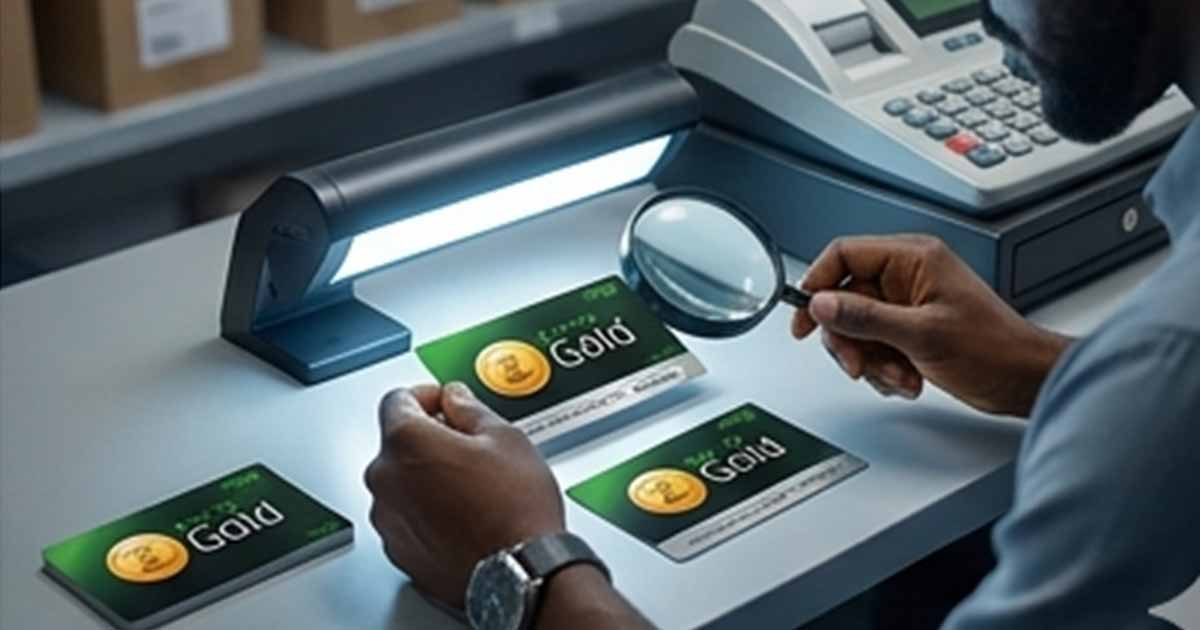
Not all fake gift cards look obviously tampered with. Experienced scammers go to great lengths to make counterfeit or already-redeemed cards look legitimate. Here are the most common signs of a fake or fraudulent gift card:
1. Scratched or Damaged PIN Area
The PIN on a legitimate gift card is protected by a silver scratch-off coating. If you receive a card where the PIN area looks scratched, re-covered with sticker tape, or where the foil looks uneven, treat it as compromised. The PIN may have already been copied and the card redeemed the moment you try to use it.
2. Mismatched or Blurry Printing
Authentic gift cards from brands like Amazon, iTunes, Google Play, Steam, or Vanilla have consistent, sharp printing. Watch for blurry logos, incorrect fonts, spelling errors, or colors that look slightly off. These are signs the card may be counterfeit — printed to look real but holding no actual value.
3. Missing or Incorrect Security Features
Many physical gift cards have holographic stickers, barcodes, or QR codes. If any of these are missing, peeled off, or visibly replaced, the card's authenticity is in question. Scan the barcode before committing to any trade — if it doesn't resolve to the brand's official redemption page, walk away.
4. Cards Sold Below Market Value
If someone is selling a gift card for ₦20,000 when the market rate puts it closer to ₦70,000–₦80,000, something is wrong. Nobody sells legitimate gift cards at a massive loss. Extreme discounts are one of the most reliable red flags in the Nigerian gift card market.
5. "Unused" Cards From Strangers
A common story: a seller claims they received a gift card as a gift but don't need it, so they want quick cash. Some of these offers are genuine, but many are a setup. Always verify the card balance independently before paying anything.
Common Gift Card Scam Patterns in Nigeria
Beyond fake physical cards, scammers use several social engineering tactics to steal from Nigerians. Knowing these patterns can save you from falling for them:
The "Pay With Gift Card" Demand
This is a globally recognized scam. Someone — often posing as a government agency, tax authority, tech support, or even a romantic partner — asks you to pay a fine, fee, or debt using gift cards. No legitimate institution in Nigeria or anywhere else asks for payment via gift card. This is always a scam.
Romance and Investment Scams Involving Gift Cards
Scammers build trust over weeks or months through online relationships, then request gift cards as "emergency help" or as part of a "crypto investment scheme." By the time the victim realizes what happened, the cards have been drained and the scammer has disappeared.
The Fake Platform Rate Bait
Some fake trading websites advertise unusually high exchange rates for gift cards — significantly above what legitimate platforms offer. They collect the card details from eager sellers, redeem the cards themselves, and either disappear or claim the cards were "invalid" to avoid paying. Always confirm a platform's legitimacy before submitting card details.
Refund Scams
A buyer purchases something from you, pays with a gift card, and then reverses their "payment" by claiming the card was sent in error — even though they've already redeemed it. Since gift card payments are irreversible from your end, you lose both the goods and the money.
How to Verify a Gift Card Before Trading
Before any trade, these verification steps should be non-negotiable:
- Check the balance directly on the brand's official website. Amazon, iTunes, Google Play, and most major brands have a balance checker. Enter the card number and PIN to confirm the exact amount before proceeding.
- Use the brand's official app where available. Some cards can only be verified after adding them to an account — do this before releasing any payment.
- Never accept verbal or screenshot-based confirmation. Screenshots can be edited. Only trust a live balance check on the official site.
- Check the card's country origin. Not all gift cards work in all regions. A US iTunes card redeemed on a Nigerian account may fail or be blocked — understand the card type you're trading.
How to Trade Gift Cards Safely in Nigeria
Reducing your exposure to scams is partly about verification and partly about choosing the right environment to trade. Here are the best practices:
Use Verified Platforms Only
Trade exclusively on platforms that have a verifiable track record, clear terms of service, and a visible customer support channel. Check for user reviews on independent Nigerian forums before trusting any platform with your card details. Avoid one-on-one P2P deals with strangers on WhatsApp or Telegram, where there's no dispute mechanism.
Never Share Full Card Details Publicly
If you're posting about a card in a group or forum, never expose the card number or PIN publicly — even in a screenshot. Bots and manual scrapers actively monitor these channels for card details to redeem immediately.
Agree on the Rate Before Sending the Card
Lock in the exchange rate before you submit the card. Some unscrupulous platforms or individuals will accept your card, then claim the rate has dropped and offer you less. A written agreement — even a chat screenshot — provides some leverage in a dispute.
Deal With Reputable Buyers/Platforms
Look for platforms with escrow-style protection, where the card is verified before payment is released. If a buyer refuses to confirm the card value upfront, that's a warning sign.
What to Do If You've Been Scammed
If you've already fallen victim to a gift card scam, act quickly:
- Report to the card issuer immediately. While recovery is unlikely once the card is redeemed, some issuers may be able to flag the account used to redeem the card.
- File a report with the EFCC (Economic and Financial Crimes Commission) or FCCPC (Federal Competition and Consumer Protection Commission) in Nigeria. These agencies are increasingly active in addressing digital fraud.
- Document everything. Save chat logs, transaction records, card details, and any communication with the scammer. This supports any investigation or potential recovery process.
- Warn your network. Gift card scammers in Nigeria often operate in cycles, targeting multiple people in the same social circle. A quick warning post can prevent others from losing money.
Red Flags Checklist: Is This Gift Card Deal Safe?
Before any gift card transaction in Nigeria, run through this quick checklist:
- ❌ Is the price significantly below market rate?
- ❌ Is someone pressuring you to act fast?
- ❌ Is the seller anonymous with no verified profile?
- ❌ Is the card packaging damaged, re-sealed, or suspicious?
- ❌ Has the PIN area been previously scratched?
- ❌ Is the platform newly created with no user reviews?
- ❌ Is someone asking you to pay a debt or fine with a gift card?
If you answered yes to any of these, stop. The risk is not worth the potential gain.
Final Word
The gift card market in Nigeria is real, and legitimate trades happen every day. But so do scams — and they're getting more sophisticated. The best protection is knowledge: know what a fake card looks like, know the common tactics scammers use, and only trade through platforms and processes that give you a chance to verify before you commit.
Stay skeptical of deals that seem too good. Check every card balance on the official source. And if a deal ever requires you to rush or skip verification, that urgency itself is the scam.