Blog
How to Receive Payment from Upwork in Nigeria: Best Withdrawal Options Explained
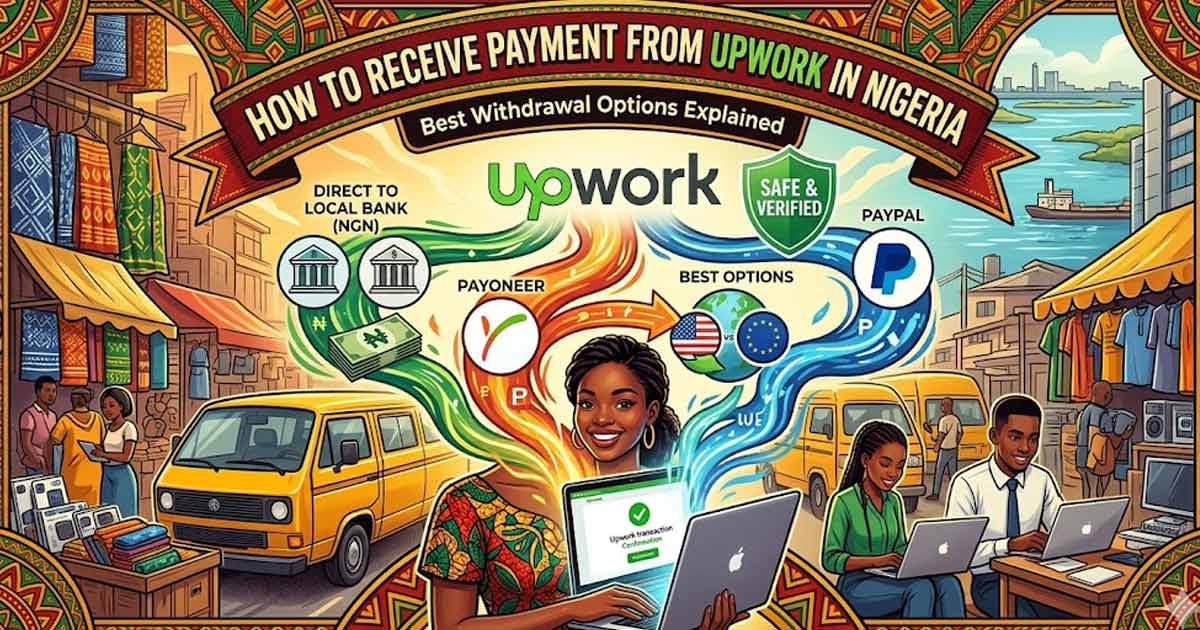
Getting Paid Is One of the Biggest Challenges for Nigerian Freelancers
Winning work on Upwork is only half the problem. The other half is withdrawing your money efficiently. A bad withdrawal choice can cost you a lot through poor exchange rates, long settlement times, or unnecessary fees. For Nigerian freelancers, this matters because even a small percentage difference becomes significant over time.
This guide breaks down the main withdrawal methods available to Nigerian Upwork users and explains which option makes the most sense depending on your priorities.
How Upwork Payments Work
Upwork pays freelancers after project earnings clear the platform's security hold. Once the money becomes available in your Upwork account, you can withdraw it using your selected payment method. The best option depends on three things:
- How quickly you want the money
- What total fees you are willing to accept
- Whether you prefer to receive naira directly or hold value in foreign currency first
Option 1: Direct Transfer to Local Nigerian Bank Account
This is one of the most convenient methods because the money lands directly in your Nigerian bank account.
How it works
- Add your local bank account details inside Upwork.
- Request withdrawal once your earnings are available.
- Upwork sends the funds and they are converted to naira before or during settlement.
Advantages
- Very convenient
- No need for extra apps or payment services
- Good for freelancers who want immediate access to naira for daily expenses
Disadvantages
- The exchange rate may be weaker than what you could get through other routes
- Settlement speed can vary
- You lose flexibility because the money is converted immediately
This method is best for simplicity, not necessarily for maximizing value.
Option 2: Withdraw to a Dollar-Receiving Fintech Account
Some fintech platforms available to Nigerians provide USD account details that can receive freelancer payments.
How it works
- Open a verified foreign currency receiving account with a supported provider.
- Add the USD account details to Upwork.
- Receive your earnings in dollars.
- Convert to naira only when you are ready, based on the provider's rate.
Advantages
- More control over conversion timing
- Potentially better rates than direct local bank settlement
- Useful if you need to keep some funds in USD for subscriptions or savings
Disadvantages
- Requires extra setup and verification
- Some providers charge receiving or withdrawal fees
- Policies can change, so you need to monitor supported payout routes
For many Nigerian freelancers, this is the most balanced option between convenience and value.
Option 3: Domiciliary Account Withdrawal
If you have a domiciliary account at a Nigerian bank, you may prefer receiving funds into it and converting later.
Why freelancers use it
- It allows you to hold dollars directly
- You can plan your naira conversion around exchange rate movements
- It fits freelancers who already manage foreign currency income professionally
Main drawback
Traditional bank routes are often slower and may involve extra charges or paperwork compared with modern fintech alternatives. This makes them more suitable for larger, less frequent withdrawals.
Option 4: Third-Party Withdrawal Services
Some freelancers use third-party payment processors connected to Upwork to receive funds before moving them into Nigerian bank accounts.
Advantages
- Often faster than direct bank routes
- More control over withdrawals
- Can offer better documentation and multi-currency handling
Risks and downsides
- Extra layers of fees
- Account verification or compliance reviews
- Exchange rate loss if you convert too quickly or through the wrong route
This option can work well if you already use one of these services for other freelance income streams.
What Actually Affects Your Final Naira Value
Freelancers often focus only on visible withdrawal fees and ignore the bigger factor: exchange rate quality. A service that charges a low fixed withdrawal fee can still cost you more overall if it uses a weak exchange rate.
To compare withdrawal methods properly, always check:
- Flat withdrawal fee
- Percentage fee if any
- Exchange rate offered at the time of conversion
- Total naira you receive after all deductions
The best method is the one that leaves you with the highest usable value, not necessarily the one with the smallest listed fee.
Should You Withdraw Immediately or Accumulate?
It depends on your cash flow needs.
- If you need money for regular living expenses, frequent smaller withdrawals may make sense.
- If fees are flat and your income is stable, larger less frequent withdrawals usually reduce overall costs.
- If you expect exchange rate movement and can afford to wait, holding in USD temporarily may protect value better than instant conversion.
The wrong approach is withdrawing randomly without a system. Set a schedule based on your bills, income cycle, and fee structure.
Practical Recommendation for Most Nigerian Upwork Freelancers
For most freelancers in Nigeria, the strongest setup is:
- Use a reliable USD-receiving account or fintech payout route
- Withdraw in dollars
- Convert only when needed and compare rates
- Keep a portion in USD if you have future international expenses or want some protection against naira depreciation
If you value simplicity more than optimization, direct local bank withdrawal is still acceptable. You will just usually give up some value in the process.
Common Mistakes to Avoid
- Choosing a withdrawal method based only on speed and ignoring exchange rate loss
- Sending all funds to naira immediately even when you have dollar-denominated expenses
- Using unofficial middlemen to help with withdrawals
- Changing payout methods too often without understanding fee implications
- Failing to keep proper records for taxes and personal accounting
Receiving Upwork payment in Nigeria is not just about getting your money out. It is about building a repeatable system that preserves as much of your income as possible.