Blog
How the Middle East War Is Raising Fuel and Living Costs in Nigeria
Last Updated: April 13, 2026
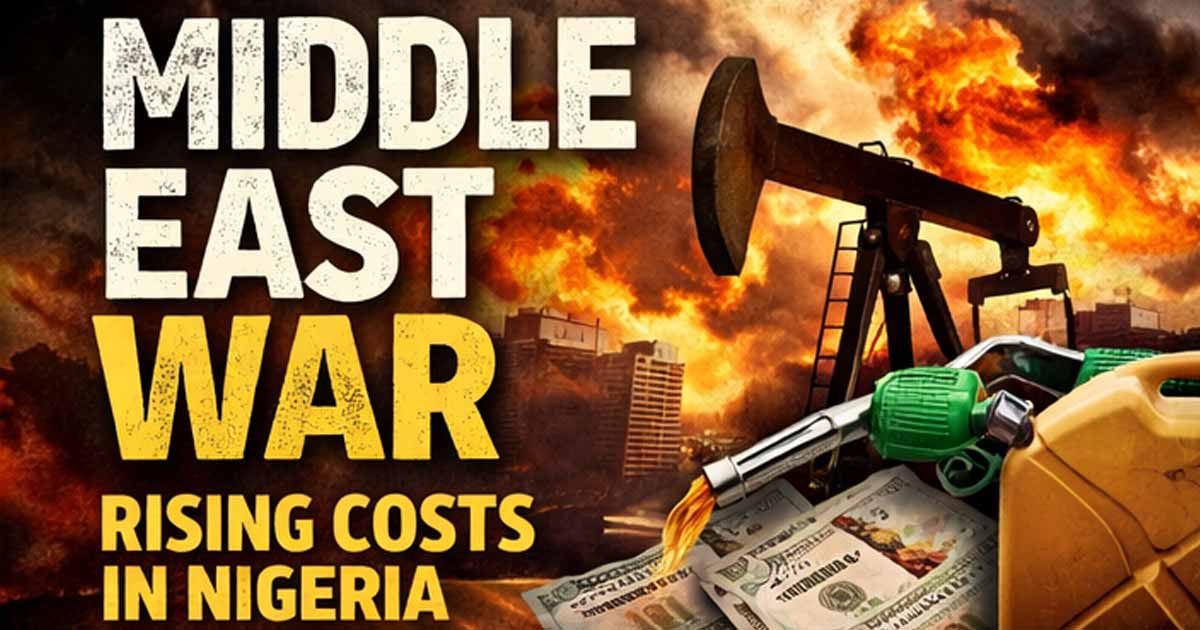
The short answer is yes: the war in the Middle East has already made life more expensive in Nigeria. The biggest reason is oil. When conflict disrupts energy markets, crude prices rise, fuel becomes more expensive, and that cost spreads into transport, food distribution, generator use, and small business expenses. That is why a faraway war can quickly become a daily budget problem in Nigerian homes.
## What happened in the Middle East, and why should Nigerians care?
The current conflict has disrupted global energy supply expectations and pushed oil prices much higher than they were before the war. For Nigeria, that matters because even though Nigeria is an oil producer, households and businesses still feel pain when petrol, diesel, and logistics costs rise. Local refineries help, but domestic prices still react to global oil pressure, crude sourcing, exchange-rate conditions, and supply-chain costs.
## Why does an oil shock hit daily life so fast in Nigeria?
Because fuel is not just about filling a tank. Fuel affects almost everything. It affects buses and keke fares, delivery vans, market transport, generators, farm logistics, cold storage, and mobile business operations. Many Nigerian homes and small businesses still rely on generators because public power is not steady enough. So when petrol and diesel rise, people do not only pay more to move around. They also pay more to keep lights on, run freezers, charge devices, and stay online for work.
## How does fuel become food inflation?
Food prices do not rise only because of farming costs. They also rise because food has to move. If transporters pay more for petrol or diesel, traders pass part of that cost to wholesalers, retailers, and finally households. Once haulage becomes more expensive, tomatoes, rice, yam, fish, bread ingredients, and packaged goods all start feeling the pressure. That is why a fuel shock often shows up first in transport and then in food.
## What does this mean for ordinary Nigerians right now?
It means many households will keep seeing pressure in five places at once: transport, food, power, data-related hustle costs, and the general cost of running a home. If you take buses to work, buy fresh food regularly, depend on generator power, or run a small side hustle, a fuel shock is not abstract economics. It is a weekly budget problem.
People who receive remittances, freelance in dollars, or watch gift card rates also pay attention to these shocks because what matters is not only the exchange rate on paper. What matters is purchasing power. If living costs rise faster than your income improves, your money still feels weaker in real life.
## Quick table: How the Middle East war reaches a Nigerian household
| Global event | What changes first | What Nigerians feel next |
|---|---|---|
| War disrupts oil market | Crude price rises | Petrol and diesel become more expensive |
| Fuel gets more expensive | Transport and logistics costs rise | Bus fares, delivery costs, market prices go up |
| Energy costs stay high | Generator use becomes more expensive | More pressure on homes and small businesses |
| Inflation risk rises | Household budgets lose flexibility | Food, power, transport and data feel harder to afford |
## What should Nigerians watch next?
Watch three things. First, whether oil prices stay high or cool further. Second, whether pump prices in Nigeria stabilize or keep climbing. Third, whether transport and food prices keep rising in local markets even when macro headlines sound more positive. Exchange-rate stability may help a little, but it cannot fully cancel an energy shock if fuel remains expensive.
The Middle East war is not far away from Nigeria’s cost-of-living problem. It reaches Nigerian households through petrol, diesel, transport, food, and generator costs. In simple terms, when global energy tension rises, daily life in Nigeria usually gets more expensive.
## FAQs
### 1. Why does a war outside Africa affect prices in Nigeria?
Because oil is a global market. When supply fears rise, oil prices rise, and fuel-dependent economies feel it through transport and inflation.
### 2. Is Nigeria not an oil-producing country?
It is, but that does not automatically protect households from global price shocks, especially when domestic pricing, refining, logistics, and FX pressure still matter.
### 3. Why does food get more expensive when fuel rises?
Because food has to be transported, stored, and sold. Higher fuel costs push up logistics and market prices.
### 4. Does this affect electricity too?
Yes. Many households and small businesses still rely on generators, so higher petrol and diesel prices can raise power-related costs too.
### 5. Why do people who track dollars, remittances, or gift card rates care?
Because the real issue is purchasing power. If living costs rise, the value of any income linked to FX or digital value changes in practical terms.