Blog
How Nigerian Freelancers Can Use Crypto to Receive International Payments
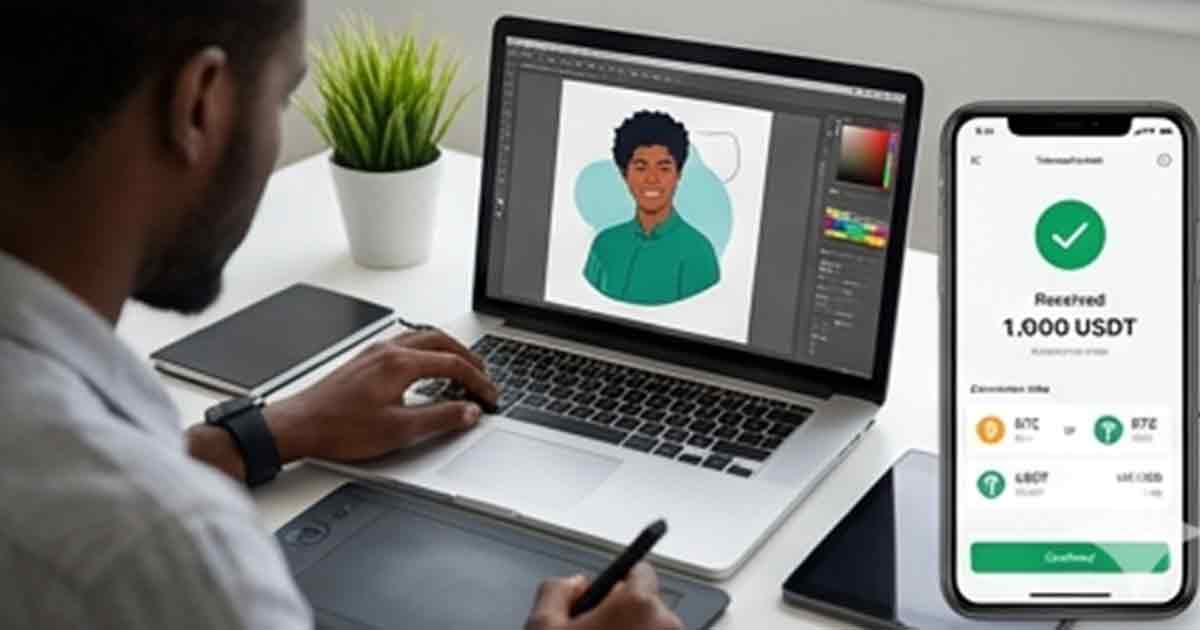
The Payment Problem Every Nigerian Freelancer Knows Too Well
You have just landed a foreign client. The contract is signed, the work is done, and the invoice is sent. Then reality hits: they want to pay via PayPal, and you are in Nigeria.
PayPal has allowed Nigerians to send money for years, but receiving payments remains officially restricted. Wise and Payoneer work, but they come with withdrawal delays, conversion fees, and sometimes unexplained account freezes. Traditional bank transfers in foreign currency run into CBN documentation hurdles that can hold your funds for days.
This is the daily friction of being a skilled Nigerian professional in a global marketplace. The work is world-class. The payment infrastructure is not.
Cryptocurrency, specifically stablecoins like USDT (Tether), has become the practical workaround that thousands of Nigerian freelancers are quietly using to bridge this gap. This guide walks through how it works, which platforms to use, and what risks to manage.
Why Crypto Works for International Freelance Payments
The core appeal is simple: crypto operates outside the traditional banking rails that create friction for Nigerian accounts. When a client in the UK, US, or Canada sends USDT, the transaction settles on a blockchain. There is no correspondent bank, no CBN documentation requirement, and no intermediary who can freeze the transfer mid-route.
Key advantages for Nigerian freelancers:
- Speed: USDT on TRC-20 (Tron network) settles in minutes, not 3-5 business days.
- Low fees: TRC-20 transaction fees are often less than , compared to - for international wire transfers.
- Dollar-pegged value: USDT holds a 1:1 peg to the US dollar. Unlike BTC or ETH, you are not exposed to price swings while waiting to convert.
- No PayPal problem: Your client sends from any exchange or wallet worldwide; you receive in yours regardless of your Nigerian status.
- Naira conversion on your terms: You choose when to convert, which platform to use, and at what rate.
Step 1 - Set Up a Crypto Wallet or Exchange Account
Before you can receive crypto, you need an address. You have two main options:
Option A: Custodial Exchange Account (Easier)
Sign up on a regulated exchange that operates in Nigeria. They hold your crypto on your behalf and provide a wallet address. Recommended platforms:
- Binance - The largest exchange globally. Provides USDT wallets on TRC-20, BEP-20, and ERC-20. Has a built-in P2P marketplace to sell USDT for Naira directly.
- Yellow Card - African-focused crypto platform. Supports NGN deposits and withdrawals. KYC is straightforward for Nigerian users.
- Quidax - Nigerian-founded exchange. Supports USDT/NGN trading pairs with naira bank withdrawals.
- Prestmit - Primarily known for gift cards but also handles USDT. Good for smaller amounts and quick Naira conversion.
For most freelancers, Binance is the go-to because of its liquidity and the P2P feature that lets you sell USDT at competitive Naira rates.
Option B: Non-Custodial Wallet (More Control)
Apps like Trust Wallet or MetaMask give you full control of your private keys. You own the crypto directly, not the exchange. The downside is you then need to move it to an exchange when you want to convert to Naira.
For freelancers who are just starting with crypto, Option A is safer and simpler.
Step 2 - Share Your USDT Address With Your Client
Once your account is set up, navigate to your USDT wallet and copy your deposit address. Specify the network clearly-TRC-20 (Tron) is recommended because fees are lowest. A typical TRC-20 address starts with the letter T.
Communicate this to your client in plain terms:
"Please send payment in USDT via the TRC-20 network to this address: [your address]. Do not use ERC-20 or BEP-20 unless agreed-wrong network means lost funds."
If your client is not familiar with crypto, you can direct them to buy USDT on Coinbase, Binance, or Kraken (all available in the US, UK, and EU) and send from there.
Step 3 - Confirm Receipt
Once your client sends the payment, you will receive a notification from your exchange app. You can also verify on the blockchain using a tool like Tronscan (for TRC-20 transactions) by pasting the transaction hash.
USDT transactions on TRC-20 typically confirm within 1-3 minutes. Amounts over certain thresholds may require more confirmations before your exchange credits the balance.
Step 4 - Convert USDT to Naira
This is where your choice of platform matters for the final Naira amount you receive.
Method 1: Binance P2P (Most Popular)
Binance P2P connects you directly with buyers who want USDT and will pay you Naira via bank transfer. Steps:
- Go to Binance app ? Trade ? P2P.
- Select Sell, choose USDT.
- Browse buyer listings-compare rates and choose a verified buyer with high completion rates.
- Enter amount, confirm, and the USDT is held in escrow by Binance.
- Buyer sends Naira to your bank account. Confirm receipt, release USDT from escrow.
Always verify Naira hits your account before releasing. Never release based on a screenshot alone.
Method 2: Yellow Card or Quidax
These platforms offer direct USDT-to-Naira sell orders. The rate is usually slightly below the parallel market rate but the process is faster and simpler than P2P. Good for smaller amounts where speed matters more than squeezing every Kobo.
Method 3: Prestmit
Works well for quick conversions under . Upload your USDT amount, check the rate, confirm, and receive Naira to your bank account typically within minutes.
How Much Naira Will You Actually Get?
The rate you get depends on the platform and market conditions. As of mid-2026, the parallel market rate hovers around ?1,580-?1,620 per dollar, while Binance P2P trades for USDT usually settle in a similar range.
Compare this to a bank transfer arriving through official CBN channels, which may be converted at the official rate (often lower) plus bank fees. The crypto-to-P2P route typically yields more Naira per dollar for freelance income.
Note: Rates change daily. Always check before you convert.
Platforms Your Clients Can Use to Send USDT
Your international clients do not need to be crypto experts. Here are easy starting points by region:
- US clients: Coinbase, Kraken, or Binance.US ? buy USDT ? send to your TRC-20 address.
- UK clients: Coinbase UK, Kraken EU, or Revolut (with crypto feature enabled).
- EU clients: Kraken, Binance EU, or Bitstamp.
- Clients in other African countries: Yellow Card, Paxful, or Binance.
Risks to Understand Before You Start
Crypto is not risk-free. Managing these risks is part of the process:
Wrong Network Transfers
Sending USDT on the wrong network (e.g., sending ERC-20 to a TRC-20 address) can result in lost funds. Always double-check the network with your client before every transaction. Consider doing a small test transfer first.
Exchange Rate Volatility
USDT itself is stable, but the USDT/NGN rate moves with the broader FX market. If you receive payment today but delay conversion for two weeks, you may get a better or worse Naira rate. For project fees, convert promptly unless you have a reason to hold.
P2P Scams
On Binance P2P, only trade with verified buyers who have high completion rates (above 95%) and many completed trades. Never release USDT from escrow until you have confirmed the Naira is actually in your bank account, not just in a screenshot sent by the buyer.
Tax and Compliance
Income received in crypto is taxable in Nigeria as regular income. The FIRS has not issued comprehensive crypto-specific guidance as of 2026, but the general position is that income earned-regardless of form-is subject to personal income tax. Keep records of each transaction: amount, date, client, and converted Naira value at time of receipt.
Exchange Account Risk
Centralized exchanges can freeze accounts or restrict withdrawals. Do not use your exchange wallet as a long-term savings account. Convert and withdraw to your bank regularly.
Frequently Asked Questions
Is it legal to receive payments in crypto as a Nigerian freelancer?
The CBN's 2021 circular restricted banks from processing crypto transactions, but it did not make holding or using crypto illegal for individuals. As of 2023, the CBN also reversed some of those restrictions for licensed exchanges. Freelancers using regulated platforms like Binance or Yellow Card are operating in a legal grey-to-accepted zone. The FIRS position is that crypto income is taxable. Consult a local tax professional for your specific situation.
What is the minimum amount worth converting via P2P?
Most P2P buyers on Binance set minimum order sizes-often around - USD equivalent. For smaller amounts, Yellow Card or Prestmit have lower minimums and may be more practical.
Can I invoice my client in USDT?
Yes. You can add a line to your standard invoice: "Payment accepted in USDT (TRC-20). Address: [your address]." Many international clients working with African freelancers are already familiar with this. For new clients, a brief explanation usually removes any hesitation.
Do I need to do KYC on these platforms?
Yes. All regulated exchanges require KYC (Know Your Customer) verification-typically a government ID and a selfie. This is standard practice and necessary for you to withdraw Naira to your bank. Complete KYC before you start working so you are not scrambling when your first payment arrives.
What if I want to save in dollars instead of converting immediately?
Holding USDT is effectively holding dollars. Many Nigerian freelancers keep a portion of their USDT on platforms like Binance or in a Trust Wallet as a dollar savings buffer, converting only what they need for monthly expenses. This is a common strategy given ongoing Naira depreciation.
The Bottom Line
The combination of a USDT wallet, a client brief on how to send, and a P2P exchange account is the simplest, fastest payment setup for a Nigerian freelancer with international clients today.
The PayPal problem is a real and persistent friction point, but it has a well-worn solution that thousands of Nigerian professionals are already using. Setting up takes less than an hour. The first successful payment is the learning curve.
Do the setup once, and the payment channel is open indefinitely-regardless of exchange rate policy, bank restrictions, or which payment processor decides to restrict Nigerian accounts next.