Blog
How to Secure Your Crypto Exchange Account Before Cashing Out in Nigeria
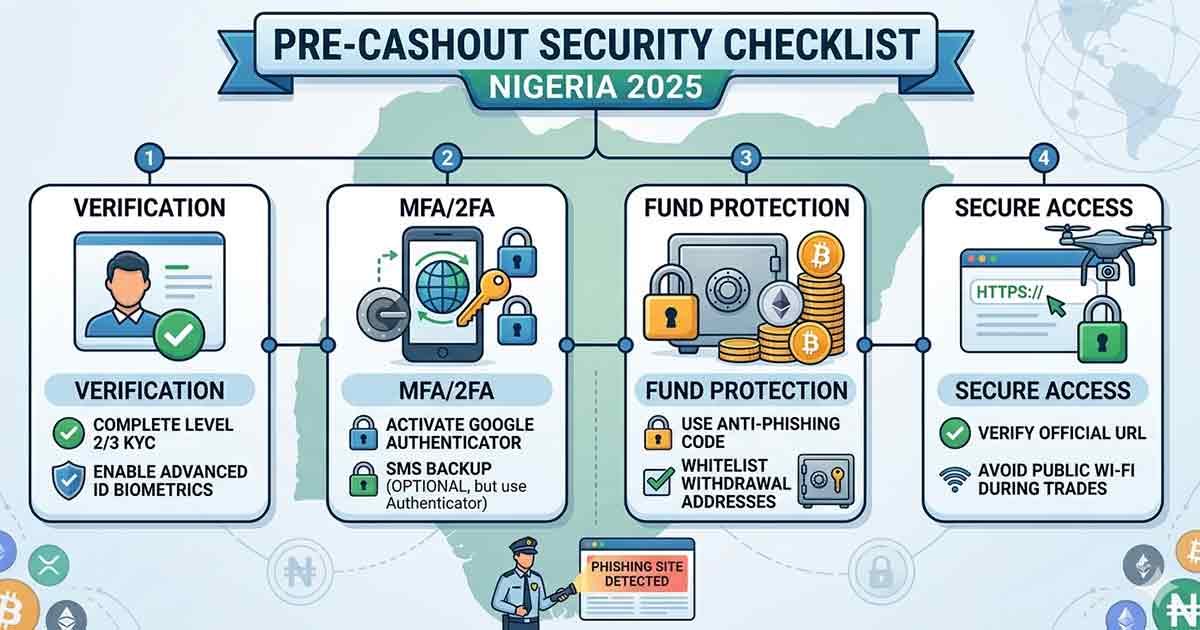
Cashing out crypto in Nigeria can be fast, but speed should not come before account safety. Whether you use an instant conversion app, a centralised exchange, or a P2P marketplace, one weak security habit can expose your funds before the Naira reaches your bank account.
This guide explains the checks to complete before converting crypto to Naira, especially if you are using an exchange account that holds your coins, bank details, and identity information.
Why exchange security matters before cashing out
Many users focus only on rate and speed when converting crypto to Naira. Those are important, but they are not the full picture. Your exchange account may contain your crypto wallet, transaction history, email, phone number, KYC details, and linked bank account. If an attacker gets access, they may not need to break blockchain technology. They only need to trick you or control your login.
Common risks include phishing links, fake support agents, SIM swap attacks, weak passwords, copied wallet addresses, P2P payment disputes, and malware on shared devices.
Pre-cash-out security checklist
| Check | Why it matters | Safer action |
|---|---|---|
| Login URL or app source | Fake exchange pages can steal passwords. | Open the app directly or type the official domain yourself. |
| Password strength | Reused passwords are easy to compromise. | Use a unique password stored in a reputable password manager. |
| Two-factor authentication | Password-only accounts are easier to take over. | Use an authenticator app where available, not only SMS. |
| Withdrawal settings | Attackers often change payout details. | Confirm bank account, wallet address, and withdrawal whitelist before selling. |
| Email security | Your email controls password resets. | Secure email with 2FA and review recent login activity. |
| Device safety | Malware can copy codes and addresses. | Avoid public computers and update your phone before large transactions. |
Use the right kind of 2FA
Two-factor authentication adds a second approval step after your password. In Nigeria, many users rely on SMS OTP because it is familiar. SMS is better than no 2FA, but it can be vulnerable if your SIM is swapped, your phone is stolen, or your network messages are intercepted.
If your exchange supports an authenticator app, use it. Save backup codes offline in a safe place. Do not store backup codes in the same email account used to log in to the exchange.
Watch out for phishing before every login
Phishing is a major risk because fake pages can look like real exchanges. Attackers may send links through WhatsApp, Telegram, email, SMS, sponsored ads, or fake customer support accounts. The message may claim that your account will be suspended unless you verify immediately.
Before entering your password, check:
- The domain spelling.
- Whether the link was sent by an official channel.
- Whether the message uses pressure or threats.
- Whether the page asks for your seed phrase or full backup code.
- Whether the app was downloaded from the official app store or the provider's website.
No legitimate exchange support agent should ask for your password, seed phrase, private key, or full 2FA backup codes.
Confirm wallet addresses carefully
If you are sending crypto to an exchange wallet before selling, confirm the asset and network. Sending USDT on the wrong network, or sending one coin to an address meant for another coin, can cause permanent loss or a long recovery process.
Use this routine:
- Select the exact asset, such as USDT, BTC, ETH, LTC, or TRX.
- Select the correct network shown by the receiving platform.
- Copy the address directly from the app.
- Compare the first and last characters after pasting.
- For large transfers, consider a small test transaction first.
- Wait for the required confirmations before assuming the funds have arrived.
P2P cash-out risks to control
P2P marketplaces can be useful, but they add human counterparty risk. A buyer may delay payment, send fake alerts, use a third-party account, pressure you to release crypto early, or start a dispute after payment.
Safer P2P habits include:
- Trade only inside the platform's escrow system.
- Never release crypto because of a screenshot or SMS alert alone.
- Confirm money inside your banking app before releasing assets.
- Avoid buyers who ask to move the conversation outside the platform.
- Check buyer completion rate, trade count, and negative reviews.
- Use bank accounts that match the buyer's verified name where possible.
Instant conversion apps still require caution
Some apps remove the need to negotiate with individual buyers by converting crypto directly to Naira. That can reduce P2P stress, but it does not remove every risk. You still need to check the rate, supported coins, processing time, wallet address, KYC requirements, and customer support channel.
Use platforms with clear terms, visible support, identity verification, and transaction records. Avoid platforms that exist only as a social media page with no formal process.
What to do if you notice suspicious activity
If you see a login alert, unknown withdrawal, changed bank details, or email reset attempt, act quickly:
- Stop all transactions immediately.
- Change your exchange password from a clean device.
- Change your email password and revoke unknown sessions.
- Disable withdrawals if the platform allows it.
- Contact official support through the app or website, not through random DMs.
- Move remaining funds only after confirming your device and account are secure.
Final thoughts
The safest crypto cash-out process is not only about finding a good rate. It is about controlling the steps before the trade: secure your login, verify the platform, protect your email, check wallet addresses, and refuse pressure from unknown buyers. In crypto, mistakes can be difficult to reverse. A careful security routine is cheaper than learning after a loss.