Blog
Virtual Dollar Cards in Nigeria: How They Work, What They Cost, and When to Use One
What a Virtual Dollar Card Actually Is
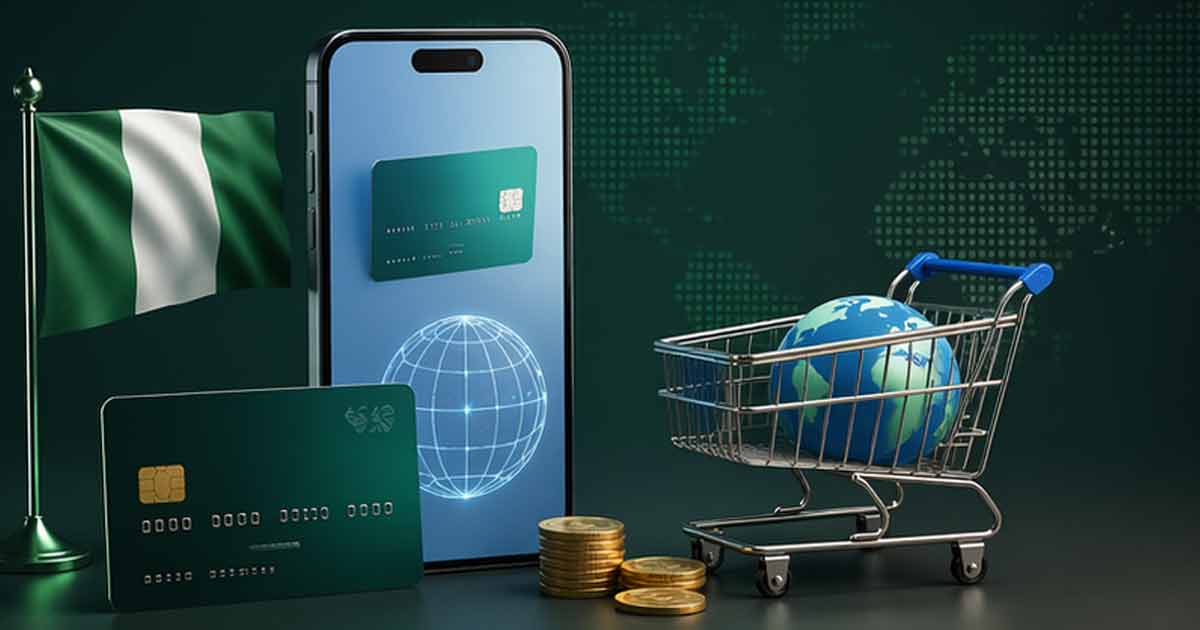
A virtual dollar card is a digital prepaid Visa or Mastercard denominated in US dollars. It exists only as a card number, expiry date, and CVV. There is no physical plastic. You fund it with naira, the provider converts your naira to dollars at their exchange rate, and the dollar balance sits on the card ready to be used for online transactions.
When you enter the card details on any website that accepts Visa or Mastercard, the transaction processes in USD. The merchant sees a normal American card payment. They have no idea you are paying from Nigeria.
This solves the single biggest payment problem Nigerian internet users face: international websites and services that reject Nigerian bank cards.
Why Nigerian Bank Cards Get Declined Internationally
If you have ever tried to pay for a service like ChatGPT, Canva Pro, Spotify, or a domain name with your Nigerian debit card, you have probably experienced a declined transaction. This happens for several reasons:
- CBN restrictions on international card transactions. The Central Bank of Nigeria has imposed various limits on foreign currency spending through naira cards over the years.
- Merchant-side fraud filters. Some international merchants block transactions from Nigerian IP addresses or Nigerian-issued cards due to high fraud rates from the region.
- Insufficient forex allocation. Your bank may not have enough dollar liquidity to process your transaction, even if you have naira in your account.
- Card type limitations. Some Nigerian cards are only enabled for local transactions and require separate international activation.
A virtual dollar card bypasses all of these issues because the card itself is issued as a US-domiciled instrument. The international merchant processes it like any other American card.
How the Funding Process Works
The typical flow:
- You create an account with a virtual card provider.
- You request a new virtual card (some providers give you one automatically).
- You fund the card by transferring naira from your bank account to the provider.
- The provider converts your naira to USD at their exchange rate and credits the dollar amount to your virtual card.
- You use the card details for online purchases.
The exchange rate the provider uses is the critical variable. It is always higher than the CBN official rate and usually slightly higher than the parallel market rate. This markup is how providers make money. The difference between providers can be ₦20-₦50 per dollar, which adds up on larger transactions.
What Virtual Dollar Cards Cost
Costs come in several forms:
Card creation fee
Most providers charge a one-time fee to create a virtual card, typically $1-$5 (charged in naira equivalent). Some offer the first card free.
Exchange rate markup
This is the biggest cost and the least transparent. Providers rarely advertise their exact markup. They show you a "rate" when you fund, and that rate includes their margin. Compare the rate offered against the current parallel market rate to estimate the markup.
Funding fee
Some providers charge a percentage (typically 1-2%) on each funding transaction. Others build this into the exchange rate.
Transaction fee
A few providers charge a small fee per transaction (often $0.50-$1). Most do not.
Maintenance fee
Some providers charge a monthly maintenance fee if the card is inactive for a certain period. Check the terms before creating a card you do not plan to use immediately.
Decline fee
Some providers charge a fee when a transaction is declined. This is uncommon but worth checking.
What You Can Use a Virtual Dollar Card For
Virtually any online payment that accepts Visa or Mastercard:
- Streaming subscriptions: Netflix, Spotify, Apple Music, YouTube Premium, Disney+
- Software and tools: Adobe Creative Cloud, Canva Pro, ChatGPT Plus, Notion, Figma
- Cloud services: AWS, Google Cloud, DigitalOcean, Vercel
- Domain names and hosting: Namecheap, GoDaddy, Cloudflare
- Online shopping: Amazon, AliExpress, eBay (though shipping to Nigeria adds complexity)
- App store purchases: Google Play, some App Store transactions
- Freelance platform fees: Upwork connects, Fiverr purchases
- Education: Udemy, Coursera, online course payments
- Gaming: PlayStation Store, Xbox, Steam (though gift cards may be cheaper for gaming)
What Virtual Dollar Cards Cannot Do
- ATM withdrawals. Virtual cards have no physical form, so you cannot withdraw cash.
- In-person payments. No physical card means no tap-to-pay or chip-and-pin at physical stores. Some providers offer physical card options for an additional fee, but that is a separate product.
- Receive payments. Virtual dollar cards are spending instruments, not receiving accounts. You cannot have someone send money to your virtual card number.
- Bypass all restrictions. Some merchants specifically block prepaid cards regardless of country of origin. Subscription services that require a "real" credit card may decline prepaid virtual cards.
How to Choose a Provider
The Nigerian fintech space has multiple virtual dollar card providers. They all solve the same core problem but differ in execution. Here is what to evaluate:
Exchange rate
This is the most important factor for frequent users. A provider with a rate that is ₦30/$ cheaper than another saves you ₦3,000 on every $100 funded. Over a year of regular use, this adds up significantly. Compare rates at the moment of funding, not just advertised rates.
Funding speed
How quickly does your naira transfer convert to available USD on the card? Some providers credit instantly. Others take 5-30 minutes. For time-sensitive purchases, instant funding matters.
Card network
Visa and Mastercard have slightly different acceptance rates on certain platforms. If a specific service you need keeps declining one network, try the other.
Reliability
Does the card actually work when you try to use it? Some providers have frequent downtime or high decline rates. Check recent user reviews and community feedback, not just the provider's marketing.
Customer support
When a transaction fails or funds are deducted without the purchase going through, how quickly can you get help? Providers with responsive in-app support or active social media support teams are worth the slight premium.
Regulatory compliance
Use providers that are licensed and regulated. Unlicensed providers may offer better rates but carry the risk of sudden shutdowns, frozen funds, or regulatory action.
Common Problems and How to Handle Them
Card declined despite sufficient balance
This usually happens because the merchant charges slightly more than the displayed price (taxes, processing fees) and your card balance is exactly at the purchase amount. Always fund slightly more than you need. An extra $2-$3 buffer prevents most declines.
Subscription auto-renewal fails
Virtual cards with zero balance will decline auto-renewal charges. If you use a virtual card for subscriptions, ensure the card stays funded before the renewal date. Some users set calendar reminders a few days before each renewal.
Refund takes too long
When a merchant refunds a virtual card transaction, the refund goes back to the card balance, not your naira bank account. Refund processing times vary: some are instant, others take 5-14 business days. This is controlled by the merchant, not your card provider.
Provider changes rates without notice
Exchange rates fluctuate, and providers adjust accordingly. If you notice a sudden rate increase, check whether the parallel market rate has moved. If the provider's markup has increased independently, it may be time to compare alternatives.
Virtual Dollar Card vs. Gift Card: When to Use Which
Both virtual dollar cards and gift cards solve the international payment problem, but they serve different use cases:
- Use a virtual dollar card when you need to pay for services that require a card on file (subscriptions, SaaS tools, cloud services). Gift cards cannot be stored as a payment method for recurring charges.
- Use a gift card when you want to make a one-time purchase on a specific platform (App Store, Google Play, Amazon, Steam). Gift cards for these platforms are often cheaper than funding a virtual card because the gift card market has its own pricing dynamics.
- Use a virtual dollar card when the merchant does not accept gift cards (most SaaS products, domain registrars, hosting providers).
- Use a gift card when you want to avoid leaving a card on file for security reasons.
Many Nigerian users maintain both: a virtual dollar card for subscriptions and recurring payments, and gift cards for one-time platform-specific purchases. This combination covers nearly every international payment scenario.