Blog
Why Many Nigerians Still Struggle Even as the Economy Stabilises
Last updated: April 2026
Many Nigerians still struggle even as the economy stabilises because macroeconomic improvement is not the same thing as household relief. That is the main answer. Reuters reported in April 2026 that the World Bank sees Nigeria’s economy growing by about 4.2% this year, with improved reserves, lower volatility and a debt-to-GDP ratio that fell for the first time in a decade. But the same report warned that rising fuel costs and persistent inflation still threaten incomes and poverty reduction.
## What does it mean when people say the economy is stabilising?
It usually means the broad indicators look better than before. Inflation has come down from its worst point. Foreign exchange conditions are less chaotic. Fiscal deficits are lower than in pre-reform years. Business activity is still expanding. Those are real improvements.
Reuters reported that Nigeria’s fiscal deficit was 3.1% of GDP in 2025 and that debt-to-GDP fell for the first time in a decade. That tells investors and policymakers that the economy may be becoming more orderly after a painful reform phase.
## So why are many people still struggling?
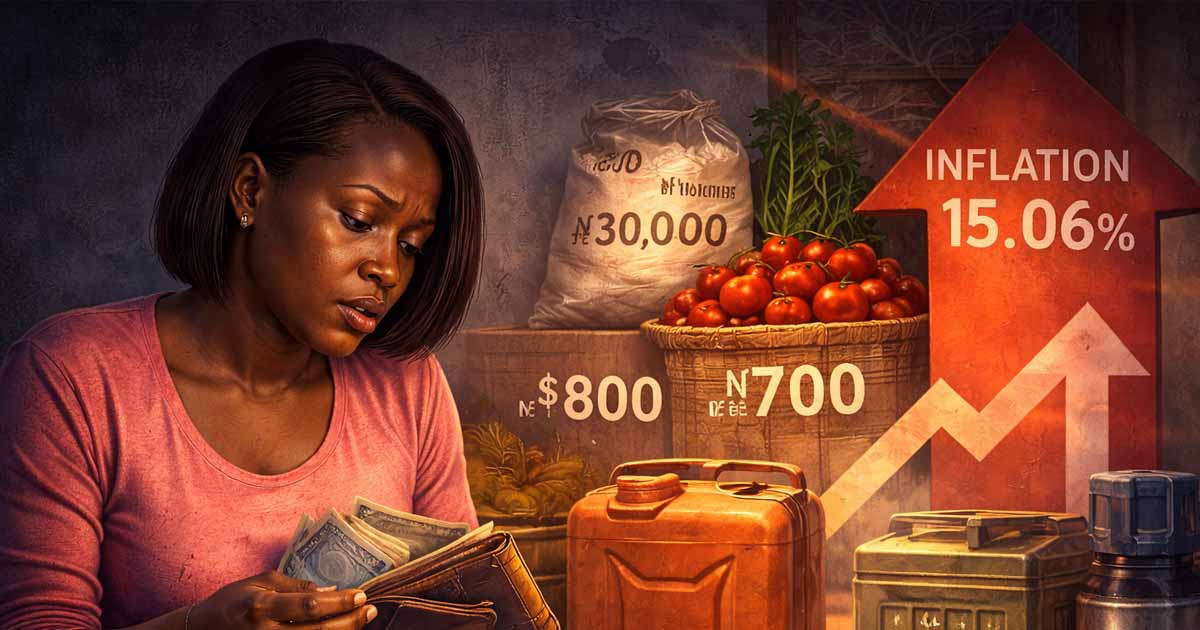
Because households live inside a different timeline. Even if the macro picture is calmer, families still pay today’s prices. They still buy food, transport, rent, power and data at current market rates. If income growth has not caught up, people still feel under pressure.
Reports on the World Bank’s April 2026 Nigeria Development Update said poverty rose to 63% in 2025. That is one of the clearest signals that stabilisation has not yet turned into broad welfare improvement.
## Are reforms helping at all?
Yes, but unevenly. Reuters said the reform programme included ending costly subsidies, devaluing the currency and changing the tax system to stabilise public finances. Those steps can improve macro stability over time. But they also impose short-term pain, especially when households lose subsidy protection before jobs and incomes adjust.
That is why people can recognise that reforms may be necessary and still say life feels harder.
## Why do fuel prices still matter so much?
Because fuel is one of the fastest ways global shocks hit local life. Reuters reported that petrol prices rose more than 50% during the recent Middle East conflict and diesel more than 70%. When that happens, transport, food distribution, generator use and production costs all rise.
So even with a more stable macro environment, one major fuel shock can still keep households under heavy pressure.
## What does this mean for ordinary Nigerians?
It means the right question is not only “is the economy improving?” The better question is “who is feeling the improvement?” If reserves are up and deficits are lower, that is useful. But if families are still cutting meals, limiting travel, postponing medical care or shrinking business inventory, the recovery does not feel complete.
That is why stabilisation and struggle can exist at the same time.
## What would real relief look like?
Real relief would look like more than better government statistics. It would mean that households begin to feel stronger purchasing power, more predictable prices, better job opportunities and lower pressure on essentials. It would also mean that businesses can expand without being crushed by borrowing costs, energy costs or weak consumer demand.
Until that happens at scale, many Nigerians will continue to hear “stabilisation” and respond, “we have not felt it yet.”
## Quick table: Stabilisation vs household reality
| Macro sign | Why it looks positive | Why households may still struggle |
|---|---|---|
| Lower inflation than before | Prices are rising more slowly | Price levels are still high |
| Better reserves and FX stability | Improves confidence and planning | Everyday costs may still remain heavy |
| Lower deficit and better debt metrics | Strengthens public finance story | Families still need income relief |
| Growth forecast around 4.2% | Signals resilience | Growth may not yet feel inclusive |
## Bottom line
Nigeria’s economy may be stabilising, but many Nigerians still struggle because macro progress does not automatically become household relief. Stability matters. But people feel recovery through purchasing power, jobs and lower pressure on everyday life—not through headlines alone.
##FAQ
1. Is Nigeria’s economy actually stabilising?There are signs of stabilisation, including lower inflation than before, improved external buffers and growth forecasts around 4.2% for 2026.2. Why are people still struggling then?Because household relief usually lags macro improvement. Prices remain high and incomes do not always recover quickly.3. Does economic growth mean families will feel better immediately?No. Growth can improve before wages, jobs and purchasing power improve broadly.4. What are the biggest pressures households still face?Food, transport, energy, rent, data and weak income growth are still major pressures.5. What would real relief look like?It would look like more stable prices, stronger incomes, better jobs and lower pressure on everyday essentials.