Blog
Why Prices Still Feel High in Nigeria Even When Inflation Slows
**Last updated: April 14, 2026**
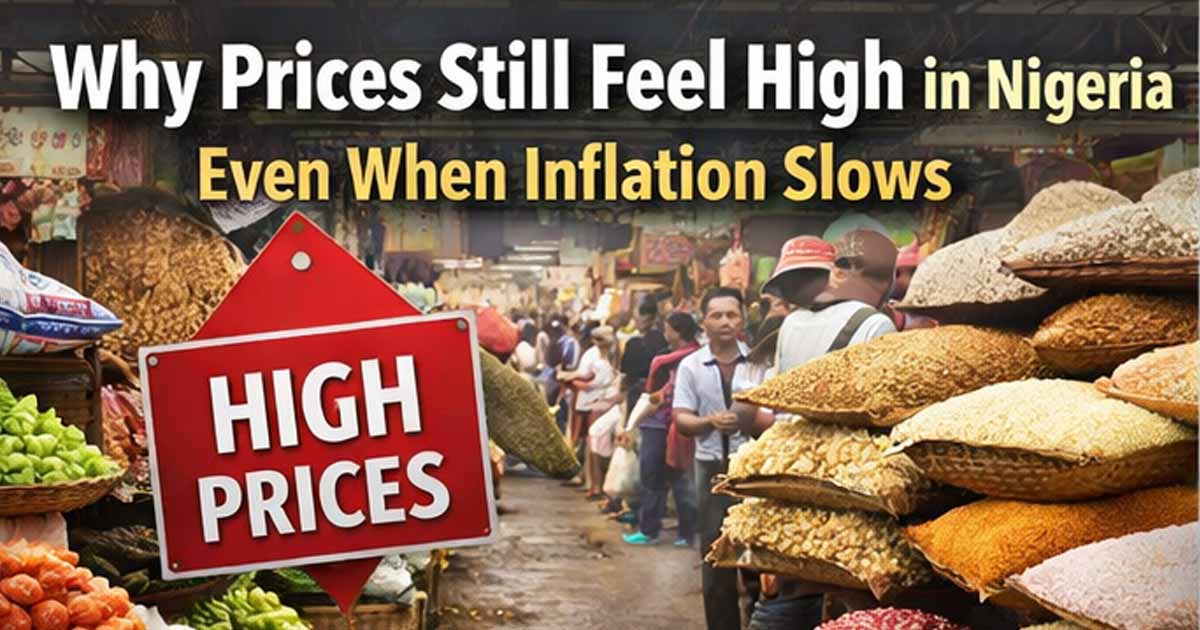
Prices still feel high in Nigeria because **slower inflation is not the same thing as cheaper living**. Nigeria’s headline inflation eased to **15.06% in February 2026**, but households still face high price levels, fragile purchasing power, and renewed pressure from fuel and transport costs.
That is why many people hear “inflation is slowing” and still say, “But the market is not cheaper.”
## Why does the market still feel expensive?
Because markets respond to real costs, not just macro headlines.
Traders, transporters, wholesalers, and households are still dealing with:
- higher fuel and logistics costs
- expensive power and generator use
- elevated rent and operating costs
- weak income growth for many families
- cautious business pricing after a period of major volatility
So even if inflation has eased from worse levels, sellers do not simply reset prices to old levels.
## Is slower inflation the same as lower prices?
No. This is the most important point.
If inflation falls from a very high level, it means prices are rising more slowly than before. It does **not** mean that bread, rice, transport, power, medicine, or school costs have suddenly become affordable again.
This is why many Nigerians feel there is a gap between economic language and daily reality.
## Which expenses still hurt households the most?
For most households, the biggest pressure points are:
- food
- transport
- power and generator fuel
- rent
- school-related costs
- mobile data and communication
- healthcare
These are not optional expenses. That is why even a small increase in essentials can make a household feel financially weaker.
## How do fuel and transport keep prices high?
Fuel remains one of the biggest channels through which cost pressure spreads. Reuters reported this week that petrol prices in Nigeria have risen by more than **50%** and diesel by more than **70%** since the Iran conflict began. That puts direct pressure on commuting, goods movement, and small-business operations.
Once transport becomes more expensive, prices in markets often stay high because sellers still need to recover the cost of moving goods.
## What about the exchange rate?
A more stable exchange rate can help over time, and the CBN’s official NFEM rate was **₦1,356.8898/$ on April 10, 2026**. That kind of stability can improve planning for importers, schools, subscriptions, medical bills, and some business costs.
But households do not shop in “exchange-rate stability.” They shop in naira. So if transport, food, and power are still expensive, many people will not feel real relief yet.
## Why does this still feel like a cost-of-living crisis?
Because the pain is cumulative.
A household may be able to absorb one high expense for a while. But when food, transport, power, school, data, and health costs all stay elevated at the same time, the budget becomes fragile. That is when people start to feel poorer even without a fresh economic collapse.
This is also why people with remittance support, freelance income, or dollar-linked earnings still watch inflation closely. Real-life value is about **what money can buy**, not only how much money arrives.
## Quick table: Why prices still feel high
| Reason | What it means in real life |
|---|---|
| Prices rose a lot earlier | Even slower inflation leaves a high price base behind |
| Fuel and transport remain costly | Markets and commuting stay expensive |
| Income growth is uneven | Households feel squeezed faster than headlines suggest |
| Essentials dominate spending | Food, power, school, and rent shape daily experience |
| Relief is slower than pain | Prices often rise fast and ease slowly |
## What would real relief look like?
Real relief would look like this:
- more stable fuel and transport costs
- slower and steadier food-price increases
- better purchasing power for wages and small-business income
- less pressure on generator and electricity spending
- more confidence that one unexpected bill will not break the monthly budget
That is the kind of change households actually feel.
## What should Nigerians watch next?
Watch these together:
- food prices in your area
- petrol and diesel trends
- transport fares
- power costs
- the official exchange rate
- whether your own income is improving
If those start moving in a better direction at the same time, households are more likely to feel real improvement.
## Bottom line
Prices still feel high in Nigeria because inflation slowing is only one part of the story. Households still live with high price levels, tight budgets, and rising essential costs. Until the cost of daily essentials eases more clearly, many Nigerians will continue to feel poorer than the headlines suggest.
## FAQs
### Why do prices stay high even when inflation slows?
Because slower inflation means slower price increases, not a return to older cheaper prices.
### Why does transport still feel expensive?
Because fuel and diesel costs remain high, and transport operators pass those costs on.
### Does exchange-rate stability mean life gets cheaper?
Not immediately. It may help over time, but everyday relief depends on food, fuel, power, and income too.
### Why do essential expenses matter more than average inflation?
Because households spend most of their money on essentials, not on a broad statistical basket in equal proportions.
### What should Nigerians use as their real economic test?
Look at what your income can still cover after food, transport, power, school, and health costs. That is the real test of relief.