Blog
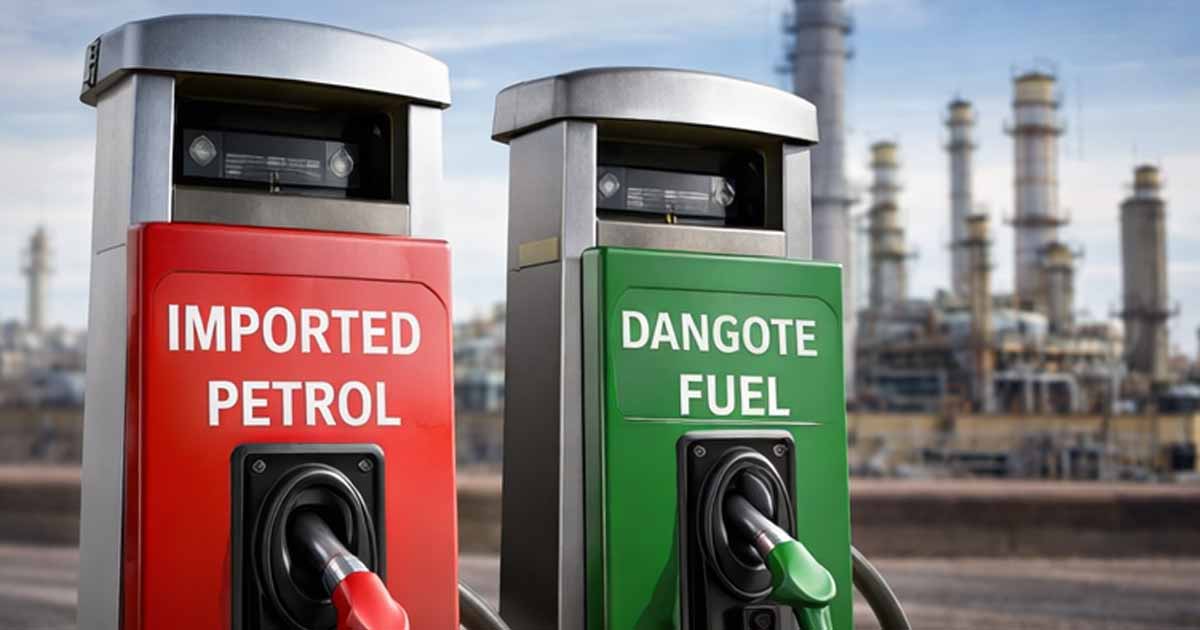
Imported Petrol vs Dangote Fuel in Nigeria: Why Pump Prices Still Feel Unstable in 2026
Last updated: April 14, 2026
Nigeria’s petrol prices still feel unstable in 2026 because local refining alone has not fully insulated the country from global oil shocks, crude supply constraints, and logistics problems. That is the short answer. Even with the Dangote refinery operating at full capacity, fuel pricing still reacts to crude costs, supply routes, distribution costs, and broader market pressure.
Why is this still a problem if Nigeria has the Dangote refinery?
Because refining capacity is only one part of the pricing story. Dangote’s 650,000-barrel-per-day refinery changes the domestic supply picture, but it does not remove the cost of crude, the effect of international energy shocks, or the economics of distribution. When crude becomes more expensive or harder to secure, the price pressure moves through the whole chain.
What role does imported petrol still play?
Imported petrol still matters because West Africa has long depended on imported refined products. When cheap import routes are disrupted, local traders lose one source of price relief. That can give Dangote more leverage in the regional market, but it also means Nigerians are still exposed to global shocks rather than fully protected from them.
Why do pump prices still rise even when refining is local?
Because local refining does not eliminate global crude prices, financing costs, storage costs, trucking costs, depot margins, or exchange-rate pressure. If crude is expensive, the final petrol price can still be expensive. If distribution is strained, the final pump price can still jump. Refining locally helps supply resilience, but it does not automatically make petrol cheap.
So is imported petrol cheaper than Dangote fuel?
Sometimes one supply source can look cheaper than the other in the short term, depending on timing, freight costs, margins, and availability. But the bigger question is not which label looks cheaper on one day. The bigger question is why Nigeria’s fuel market remains vulnerable to external shocks and domestic bottlenecks. That is what keeps the pump price unstable.
What does this mean for Nigerian households and businesses?
It means petrol prices remain a real cost-of-living issue, not just an industry debate. When petrol stays unstable, transport fares rise, delivery costs rise, generator costs rise, and market prices remain under pressure. Small businesses struggle to plan. Families feel it in commuting, food, electricity backup, and everyday budgeting.
Quick table: Imported petrol vs Dangote fuel
| Issue | Imported petrol | Dangote fuel |
|---|---|---|
| Main advantage | Can provide alternative supply routes | Shorter domestic supply chain |
| Main risk | Exposed to foreign disruptions and shipping costs | Still depends on crude cost and supply access |
| Price stability | Can vary sharply with global market flows | Also affected by global crude and local structure |
| What Nigerians care about most | Is it available and affordable? | Does it make pump prices more stable? |
What should Nigerians watch next?
Watch crude prices, local depot prices, the exchange rate, and whether domestic crude allocation to refiners improves. Those are the signals most likely to affect the pump price in real life. Nigerians do not need a perfect fuel debate. They need more stable prices.
Bottom line
Imported petrol versus Dangote fuel is not a simple winner-versus-loser story. The real issue is why petrol pricing in Nigeria still reacts so strongly to crude costs, global shocks, and domestic market structure. Dangote improves supply resilience, but it has not yet eliminated price instability.
FAQs
1. Is Dangote refinery operating at full capacity?
Reports in April 2026 indicated that the refinery was operating at full capacity, which has improved domestic and regional supply. That helps, but it does not remove all price pressure.
2. Why did petrol prices still rise if the refinery is running?
Because crude costs, logistics, and broader energy shocks still affect the full pricing chain.
3. Does imported petrol always mean lower prices?
No. Imported fuel can also become expensive when global supply routes are disrupted or shipping costs rise.
4. Why do ordinary Nigerians care about this debate?
Because petrol pricing affects transport, food, generator use, and small-business costs.
5. Can Dangote alone make fuel cheap in Nigeria?
Not by itself. It can improve supply resilience, but petrol prices still depend on crude, FX, logistics, and broader market conditions.